
Rather than using tahini, you can also forage through your local Asian store for other sesame pastes, many countries across Asia will have their own versions. Or, of course, you could make it yourself by blending sesame seeds and a pinch of salt until smooth. Mixing together the paste then only takes a couple of minutes and the rest becomes a playing field for your imagination. Be wild, my friend.
serves 4
Ramen
-
75g tahini (5 tbsp)
-
100g white miso (2 1/2 tbsp)
-
15 g brown sugar (1/2 tbsp)
-
1/2 tsp chilli powder
-
2 tbsp soy sauce
-
2 garlic cloves
-
30g ginger
-
1.5l veg stock
-
2 Tatsoi or pak choi, quartered
-
400g ramen noodles
-
1 tsp chilli flakes
-
Chilli oil for drizzling
Mushroom Topping
-
300g Shiitake mushrooms
-
4 garlic cloves
-
15g ginger
-
5 spring onions
-
1/2 tbsp brown sugar
-
2 tbsp soy sauce
-
1 tbsp rice vinegar
-
2 tbsp sesame seeds
Method
To a bowl, add the tahini, white miso, sugar, chilli powder and soy sauce. Peel the garlic and ginger and grate both into the bowl as well, then use a fork to mix everything together until well combined.
For the mushroom topping, finely dice all of the mushrooms. This can take a while, so if you want, you can use a small food processor and mince them in batches, but make sure not to overwork them or they will bruise and turn mushy. Heat 3 tbsp of neutral oil (or just olive oil) in a large frying pan and add half of the mushrooms along with 1/2 tsp salt. Fry them until golden, then set aside and repeat with the other half (depending on the size of your pan, you might need to fry them in smaller batches. Just divide the oil and the teaspoon of salt over the whole amount).
While the mushrooms are frying, peel and finely chop the garlic, ginger and three of the spring onions. Finely slice the remaining two spring onions and set aside for later. In a small frying pan, toast the sesame seeds until golden. Bring a pan of generously seasoned water to a boil for the noodles and bring the vegetable stock to a simmer in a separate pan. When the mushrooms are done and set aside, add the garlic, ginger and spring onions to the empty pan with a bit of oil. Sauté for just a minute until the garlic is aromatic, then return the mushrooms and give everything a good stir. Add the brown sugar, soy sauce, rice vinegar most of the sesame seeds (keep some for later to garnish) and a dash of water. Continue to cook until the sauce thickens into a sticky glaze.
Drop the tatsoi/pak choi into the simmering broth and blanch it for 30 seconds. Remove and set aside. Then cook the noodles in the boiling water 1 minutes less than instructed on the packaging. While the noodles are cooking, add the tahini & miso paste to the serving bowls and pour over the hot vegetable stock, mixing it together with a fork as you go. Divide the noodles between the bowls followed by the mushroom topping, sliced spring onions, blanched tatsoi/pak choi, chilli flakes, sesame seeds and chilli oil.
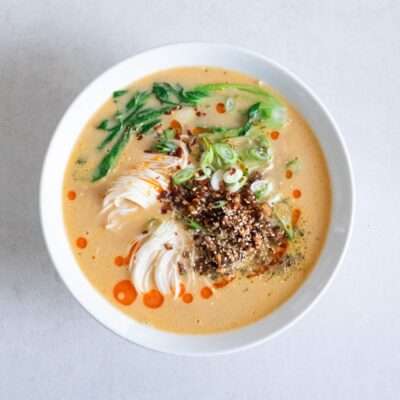
Tahini & Miso Cheat’s Ramen
Ingredients
For the ramen
- 75 g tahini (5 tbsp)
- 100 g white miso (2 1/2 tbsp)
- 15 g brown sugar (1/2 tbsp)
- 1/2 tsp chilli powder
- 2 tbsp soy sauce
- 2 garlic cloves
- 30 g ginger
- 1.5 l veg stock
- 2 Tatsoi or pak choi, quartered
- 400 g ramen noodles
- 1 tsp chilli flakes
- chilli oil for drizzling
For the mushroom topping
- 300 g Shiitake mushrooms
- 4 garlic cloves
- 15 g ginger
- 5 spring onions
- 1/2 tbsp brown sugar
- 2 tbsp soy sauce
- 1 tbsp rice vinegar
- 2 tbsp sesame seeds
Instructions
- To a bowl, add the tahini, white miso, sugar, chilli powder and soy sauce. Peel the garlic and ginger and grate both into the bowl as well, then use a fork to mix everything together until well combined.
- For the mushroom topping, finely dice all of the mushrooms. This can take a while, so if you want, you can use a small food processor and mince them in batches, but make sure not to overwork them or they will bruise and turn mushy. Heat 3 tbsp of neutral oil (or just olive oil) in a large frying pan and add half of the mushrooms along with 1/2 tsp salt. Fry them until golden, then set aside and repeat with the other half (depending on the size of your pan, you might need to fry them in smaller batches. Just divide the oil and the teaspoon of salt over the whole amount).
- While the mushrooms are frying, peel and finely chop the garlic, ginger and three of the spring onions. Finely slice the remaining two spring onions and set aside for later. In a small frying pan, toast the sesame seeds until golden. Bring a pan of generously seasoned water to a boil for the noodles and bring the vegetable stock to a simmer in a separate pan. When the mushrooms are done and set aside, add the garlic, ginger and spring onions to the empty pan with a bit of oil. Sauté for just a minute until the garlic is aromatic, then return the mushrooms and give everything a good stir. Add the brown sugar, soy sauce, rice vinegar most of the sesame seeds (keep some for later to garnish) and a dash of water. Continue to cook until the sauce thickens into a sticky glaze.
- Drop the tatsoi/pak choi into the simmering broth and blanch it for 30 seconds. Remove and set aside. Then cook the noodles in the boiling water 1 minutes less than instructed on the packaging. While the noodles are cooking, add the tahini & miso paste to the serving bowls and pour over the hot vegetable stock, mixing it together with a fork as you go. Divide the noodles between the bowls followed by the mushroom topping, sliced spring onions, blanched tatsoi/pak choi, chilli flakes, sesame seeds and chilli oil.






Pure inspo! Thank you so much for this. It’s a winner. 😀
I’m glad you like it, thank you!
I LOVE this recipe. I’m making it tonight for my flatmate but she despises mushrooms 💔 can’t relate but it’s sad. Is there anything you’d recommend as an alternative?
I’m sorry I saw this too late. Hope it was a success! Next time, you can try crumbling up some firm tofu into small pieces and cooking it the same way as the chopped mushrooms. Soy mince (which is just made from ground soybeans, essentially soybean flour) is also a great option. You only need to rehydrate it in boiling water before using it the same way as the tofu.