
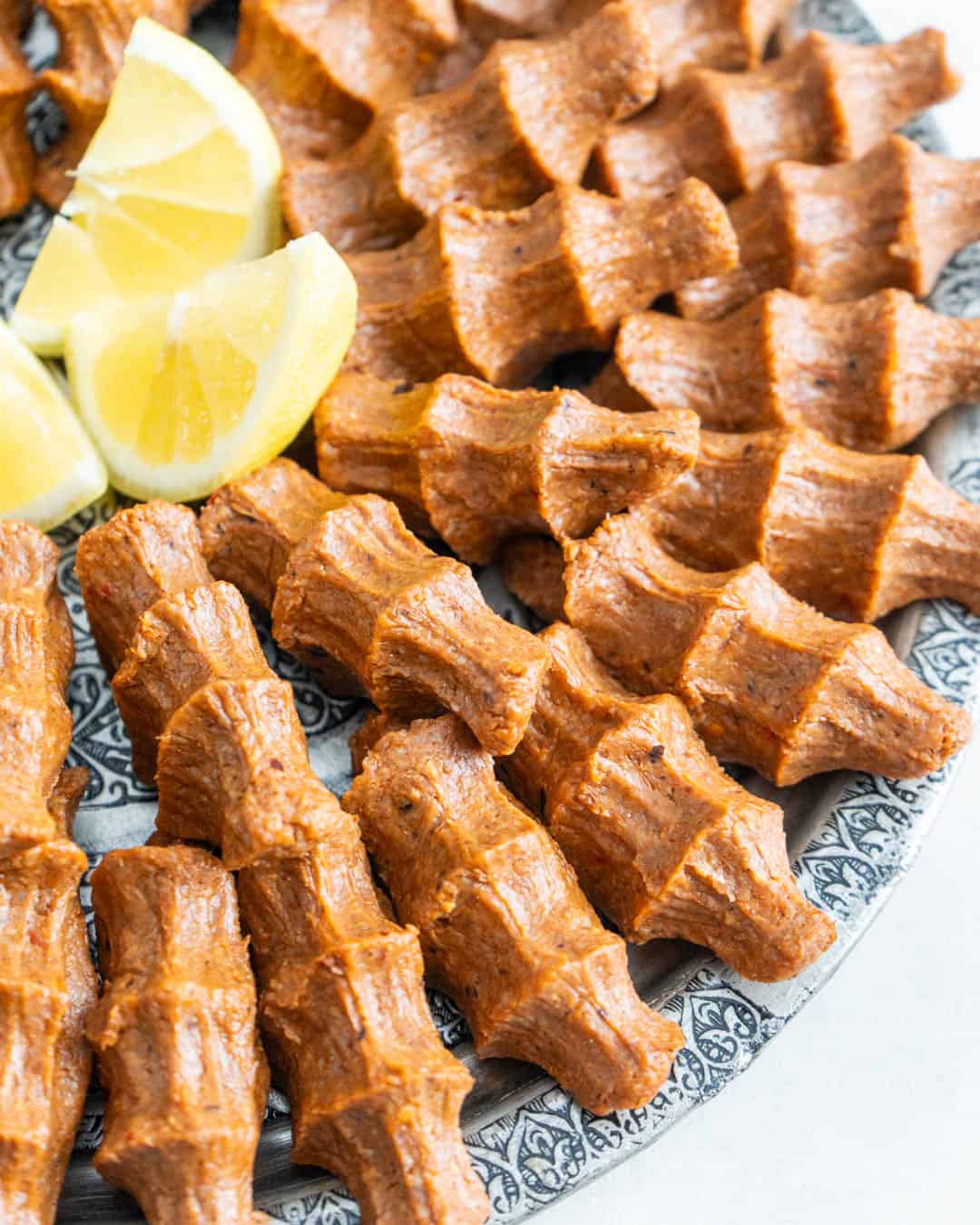
Who would have thought that the Turkish Health Ministry would play a part in creating one of the country’s most iconic plant-based street food dishes? Çiğ Köfte has long been a staple food in the southeastern parts of Türkiye. However, it is traditionally made with a mixture of bulgur and raw meat, giving it its name, which literally translates to “raw meatballs”. In 2008, the Healthy Ministry banned the use of raw meat over safety concerns and vendors started using a mixture of bulgur and walnuts instead. Nowadays, it is widely known amongst Turks that Çiğ Köfte sold as street food happens to be plant-based, yet the dish remains a firm favourite with locals.
A word of warning – if you’re on a plant-based diet, do always make sure to check ahead of ordering/tucking in. Some vendors, but mostly home-cooks, tend to ignore the new law.
My Recipe Videos
History of Çiğ Köfte
The origins of Çiğ Köfte are steeped in legend. One popular story traces its roots back to the reign of King Nimrod in the ancient Adıyaman region some 3,000 years ago. According to the tale, the king forbade the use of fire, leading his people to create a dish that required no cooking. Using raw meat, bulgur and spices, they crafted the first version of Çiğ Köfte. Over time, the recipe evolved, especially in the city of Urfa, known as the heartland of the specialty.
Vegan Cultures
When I travelled to Türkiye to explore its naturally vegan food for my Vegan Cultures Series, learning how Çiğ Köfte are made was high on the list. At Çiğköfte Dükkanı, Ömer Usta taught me the art of kneading them to perfection as well as hitting the right balance of spice, tanginess and olive oil.
Çiğ Köfte Tray vs. Food Processor
Making Çiğ Köfte the traditional way is labour-intensive and involves the help of a dedicated Çiğ Köfte tray. The bulgur mixture is kneaded for around an hour by repeatedly scrubbing it over the rigid pattern of the tray, thereby slowly breaking down the bulgur and allowing it to absorb the liquid from the tomatoes and iced water.
At home, most people briefly soak the bulgur in boiling water, before blending it with the remaining ingredients in a food processor. This more modern method takes a fraction of the time, but yields an equally delicious result. I described both methods in detail below.
A Complete Protein
Thanks to the combination of brown bulgur, made from red wheat berries, and walnuts, Çiğ Köfte are also a complete protein. But what exactly is that?
A complete protein contains all nine essential amino acids that the human body cannot produce on its own and must obtain from the diet. Animal-based foods like meat, fish, eggs and dairy are typically complete proteins. However, many plant-based foods lack one or more essential amino acids, making them incomplete proteins.
Some plant foods, such as quinoa, soybeans (tofu, tempeh, edamame), chia seeds, hemp seeds and buckwheat, are complete proteins on their own. Others, like beans, lentils, nuts and seeds, are incomplete but can be combined with other sources to form complete proteins. For example, combining legumes with grains, grains with nuts or nuts with legumes can create a complete protein meal.
Our body can store these amino acids and combine them with those received from sources we consume at other times during the day. So eating a complete protein is not essential for every dish. However, combining different sources of proteins in a single meal makes it easier to cover the daily intake and will keep you full for longer.
serves 4
Ingredients
- 400g fine brown bulgur
- 3 large tomatoes (400g)
- 1 large onion (200g)
- 4 garlic cloves
- 125g walnuts
- 1 tbsp tomato paste (25g)
- 2 tbsp tatlı biber salçası (50g)
- 1 tbsp pul biber (15g)
- 1 tbsp isot pepper (15g)
- 1 tsp cumin
- 1 tsp baharat
- 1 tsp black pepper
- 3/4 tbsp salt (11g)
- 120g pomegranate molasses
- 120g extra virgin olive oil
- 1/2 lettuce
- 1 lemon
Method
With Food Processor (the quick way)
Add the bulgur to a large bowl along with 400ml of boiling water. Give it a stir and set aside for at least 15 minutes.
Meanwhile, prepare the remaining ingredients: grate the tomatoes, set aside the juices and discard the skin; peel and finely grate the onion, squeeze out and discard as much water as possible and set the flesh aside; peel and grate or crush the garlic; add the walnuts to a small food processor and crush to a fine flour.
Transfer the bulgur to a food processor along with the prepared and all of the remaining ingredients (apart from the lettuce and lemons). Then blend for 1-2 minutes, scraping down the sides occasionally, until the bulgur tastes tender and everything is evenly mixed. If it doesn’t mix completely, transfer to a bowl and give it a last mix by hand.
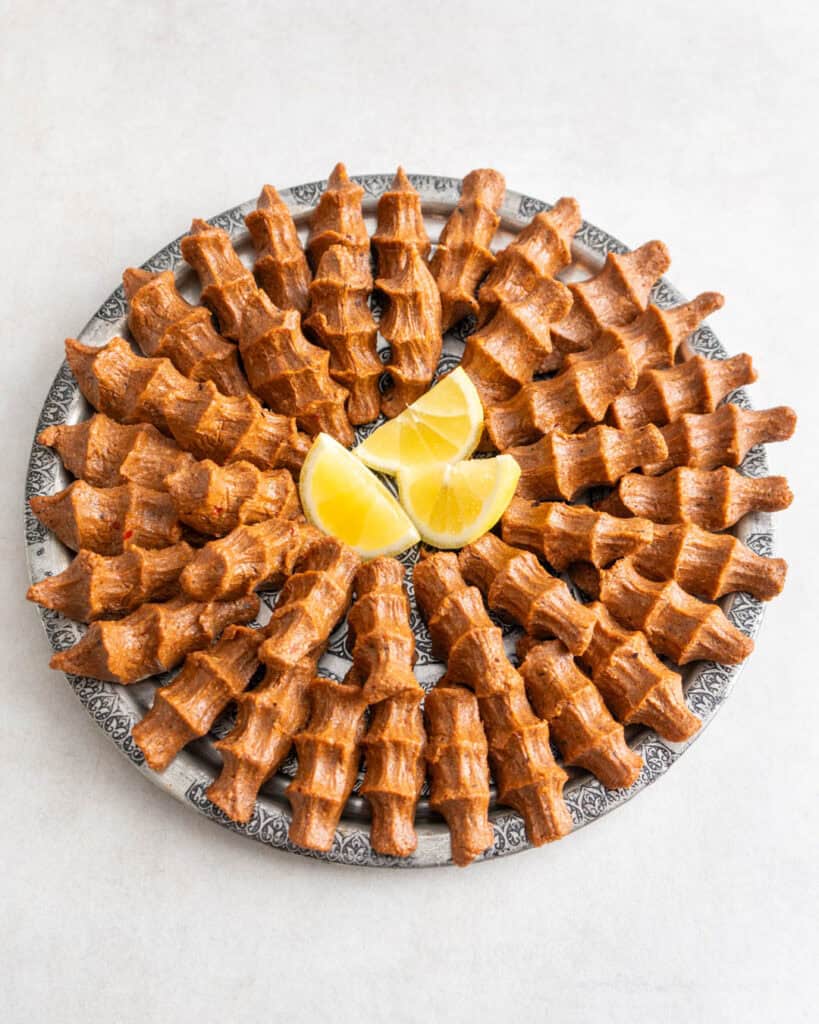
It’s easiest to shape the Çiğ Köfte while wearing kitchen gloves, if you have them. Otherwise, simply moisten your hands with water. Take a small piece of the mixture (around 30g) and shape it into a small sausage, then press it in your fist, making the indents with your fingers, to give it the iconic shape. Repeat with the rest, arranging the shaped Çiğ Köfte on a large platter as you go.
To serve, separate the lettuce leaves and cut them into squares large enough to hold a Çiğ Köfte. Cut the lemon into wedges. Divide the lemons over the tray, then serve the Çiğ Köfte alongside the lettuce. To eat one, place it on the lettuce leave, drizzle with lemon juice and tuck in.
With Çiğ Köfte Tray (the authentic way)
Grate the tomatoes, discard the skin and set the juices aside for later.
Peel and finely grate the onion, squeeze out as much water as possible and transfer the onion to the Çiğ Köfte tray. Peel and grate or crush in the garlic, then add the tomato paste, biber salçası, ground spices and salt. Mix it together into a thick paste.
Add the fine bulgur and knead it into the spice paste until evenly incorporate, then pour in the tomato juices. Knead the mixture for around 5 minutes by repeatedly scraping it with the palm of your hand over the bottom of the tray. Add 150ml of ice water (2-3 ice cubes + water) and knead for another 5 minutes. Knead in another 150ml of ice water until the ice has dissolved completely. Then loosely cover the tray with a damp towel and leave to soak for 1 hour. Knead it for another 5-10 minutes or until the bulgur tastes tender.
Add the walnuts to a small food processor, crush them to a fine flour and add to the mixture along with the pomegranate molasses. Knead for another 1-2 minutes until well incorporated. Finally, pour in the olive oil and give it one last mix until it looks even and leaves smooth indents when you poke it.
It’s easiest to shape the Çiğ Köfte while wearing kitchen gloves, if you have them. Otherwise, simply moisten your hands with water. Take a small piece of the mixture (around 30g) and shape it into a small sausage, then press it in your fist, making the indents with your fingers, to give it the iconic shape. Repeat with the rest, arranging the shaped Çiğ Köfte on a large platter as you go.
To serve, separate the lettuce leaves and cut them into squares large enough to hold a Çiğ Köfte. Cut the lemon into wedges. Divide the lemons over the tray, then serve the Çiğ Köfte alongside the lettuce. To eat one, place it on a lettuce leave, drizzle with lemon juice and tuck in.
**I receive a small commission from affiliate links on this page**

Çiğ Köfte (Turkish Bulgur Balls)
Equipment
- Çiğ Köfte Tray (optional)
Ingredients
- 400 g fine brown bulgur
- 3 large tomatoes (400g)
- 1 large onion (200g)
- 4 garlic cloves
- 125 g walnuts
- 1 tbsp tomato paste (25g)
- 2 tbsp tatlı biber salçası (50g)
- 1 tbsp pul biber (15g)
- 1 tbsp isot pepper (15g)
- 1 tsp cumin
- 1 tsp baharat
- 1 tsp black pepper
- 3/4 tbsp salt (11g)
- 120 g pomegranate molasses
- 120 g extra virgin olive oil
- 1/2 lettuce
- 2 lemons
Instructions
With Food Processor (the quick way)
- Add the bulgur to a large bowl along with 400ml of boiling water. Give it a stir and set aside for at least 15 minutes.
- Meanwhile, prepare the remaining ingredients: grate the tomatoes, set aside the juices and discard the skin; peel and finely grate the onion, squeeze out and discard as much water as possible and set the flesh aside; peel and grate or crush the garlic; add the walnuts to a small food processor and crush to a fine flour.
- Transfer the bulgur to a food processor along with the prepared and all of the remaining ingredients (apart from the lettuce and lemons). Then blend for 1-2 minutes, scraping down the sides occasionally, until the bulgur tastes tender and everything is evenly mixed. If it doesn't mix completely, transfer to a bowl and give it a last mix by hand.
- It’s easiest to shape the Çiğ Köfte while wearing kitchen gloves, if you have them. Otherwise, simply moisten your hands with water. Take a small piece of the mixture (around 30g) and shape it into a small sausage, then press it in your fist, making the indents with your fingers, to give it the iconic shape. Repeat with the rest, arranging the shaped Çiğ Köfte on a large platter as you go.
- To serve, separate the lettuce leaves and cut them into squares large enough to hold a Çiğ Köfte. Cut the lemon into wedges. Divide the lemons over the tray, then serve the Çiğ Köfte alongside the lettuce. To eat one, place it on a lettuce leave, drizzle with lemon juice and tuck in.
With Çiğ Köfte Tray (the authentic way)
- Grate the tomatoes, discard the skin and set the juices aside for later.
- Peel and finely grate the onion, squeeze out as much water as possible and transfer the onion to the Çiğ Köfte tray. Peel and grate or crush in the garlic, then add the tomato paste, biber salçası, ground spices and salt. Mix it together into a thick paste.
- Add the fine bulgur and knead it into the spice paste until evenly incorporate, then pour in the tomato juices. Knead the mixture for around 5 minutes by repeatedly scraping it with the palm of your hand over the bottom of the tray. Add 150ml of ice water (2-3 ice cubes + water) and knead for another 5 minutes. Knead in another 150ml of ice water until the ice has dissolved completely. Then loosely cover the tray with a damp towel and leave to soak for 1 hour. Knead it for another 5-10 minutes or until the bulgur tastes tender.
- Add the walnuts to a small food processor, crush them to a fine flour and add to the mixture along with the pomegranate molasses. Knead for another 1-2 minutes until well incorporated. Finally, pour in the olive oil and give it one last mix until it looks even and leaves smooth indents when you poke it.
- It’s easiest to shape the Çiğ Köfte while wearing kitchen gloves, if you have them. Otherwise, simply moisten your hands with water. Take a small piece of the mixture (around 30g) and shape it into a small sausage, then press it in your fist, making the indents with your fingers, to give it the iconic shape. Repeat with the rest, arranging the shaped Çiğ Köfte on a large platter as you go.
- To serve, separate the lettuce leaves and cut them into squares large enough to hold a Çiğ Köfte. Cut the lemon into wedges. Divide the lemons over the tray, then serve the Çiğ Köfte alongside the lettuce. To eat one, place it on a lettuce leave, drizzle with lemon juice and tuck in.




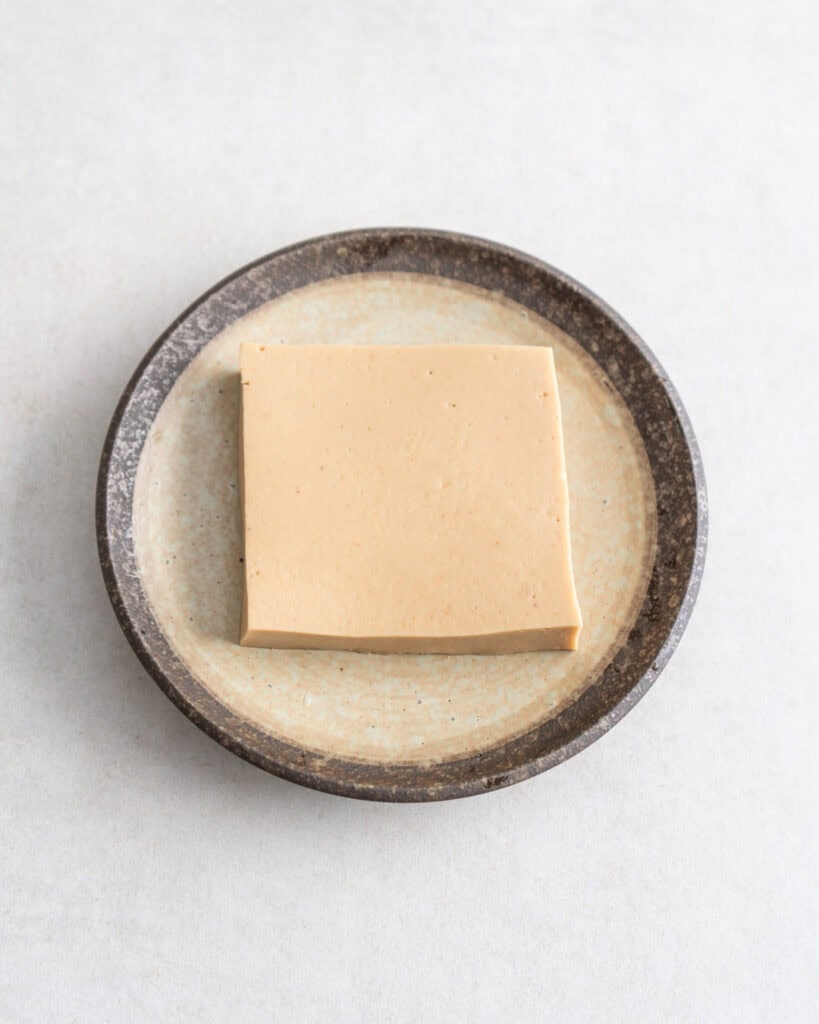
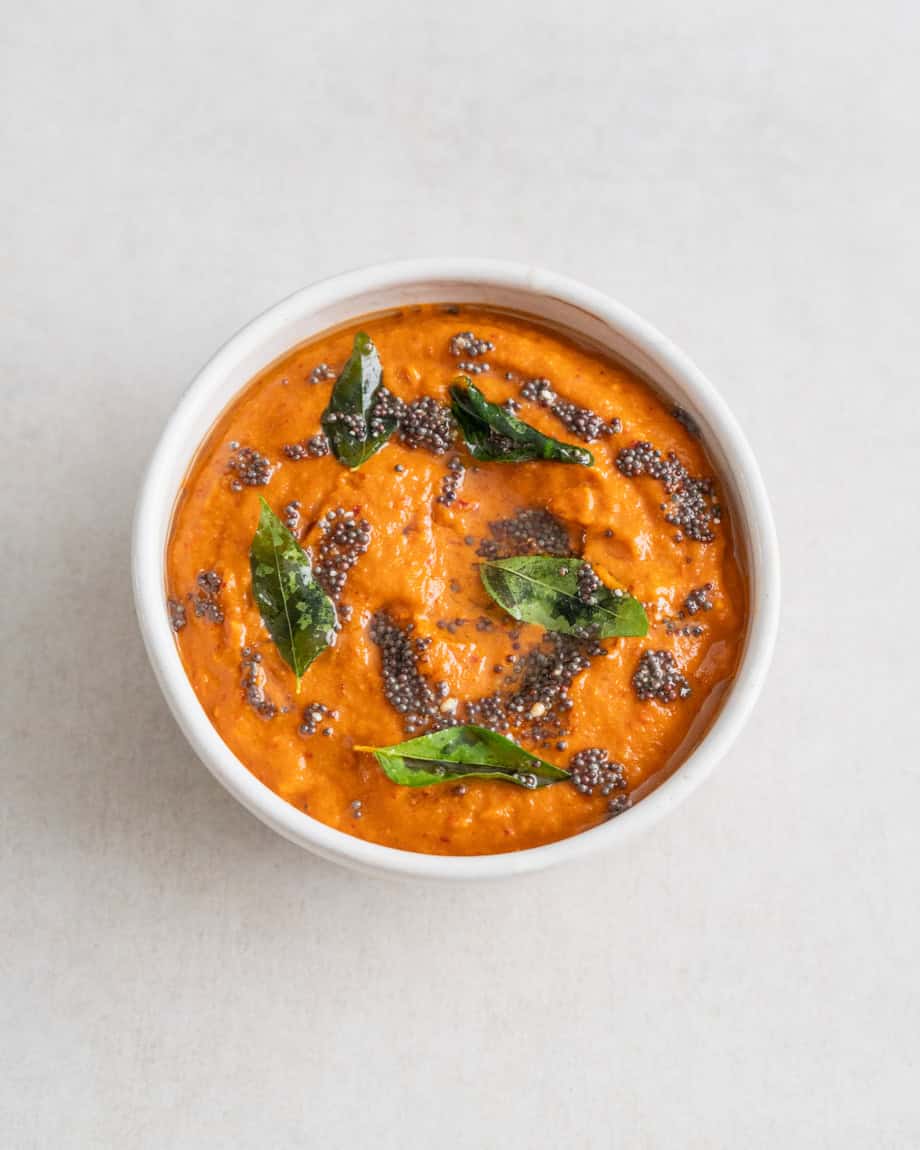


Do you have substitutes tatlı biber salçası ,pul biber and isot pepper?
For tatlı biber salças you can try using a teaspoon of ground paprika and another tablespoon of tomato paste.
For Pul Biber, use 1/2 tsp chilli flakes. For Isot pepper use chipotle chilli flakes. Hope you’ll like it!
There’s a lot of turkish vegan foods and desserts i can name a few for you if you wanna try,
Patatesli pide, poğaça, simit, açma, theres varieties of pide, poğaça and açma for example but rn i can only remember patatesli(potato) pide that can be considered as vegan theres zeytinli(olive paste) and sade(plain) poğaça, açma also can be made with zeytin(olive paste), chocolate or (sade)plain theres also a lot of desserts for example baklava which can be made with fıstık(pictachio), fındık(hazelnut) and even ceviz(walnut) or chocolate im not sure if chocolate can be considered vegan its kinda far term to me but i try my best there’s also halka tatlı, tulumba tatlı which both were very similar to each other thats all i can remember for now if you’d like to try you can chech these recipes best regards …
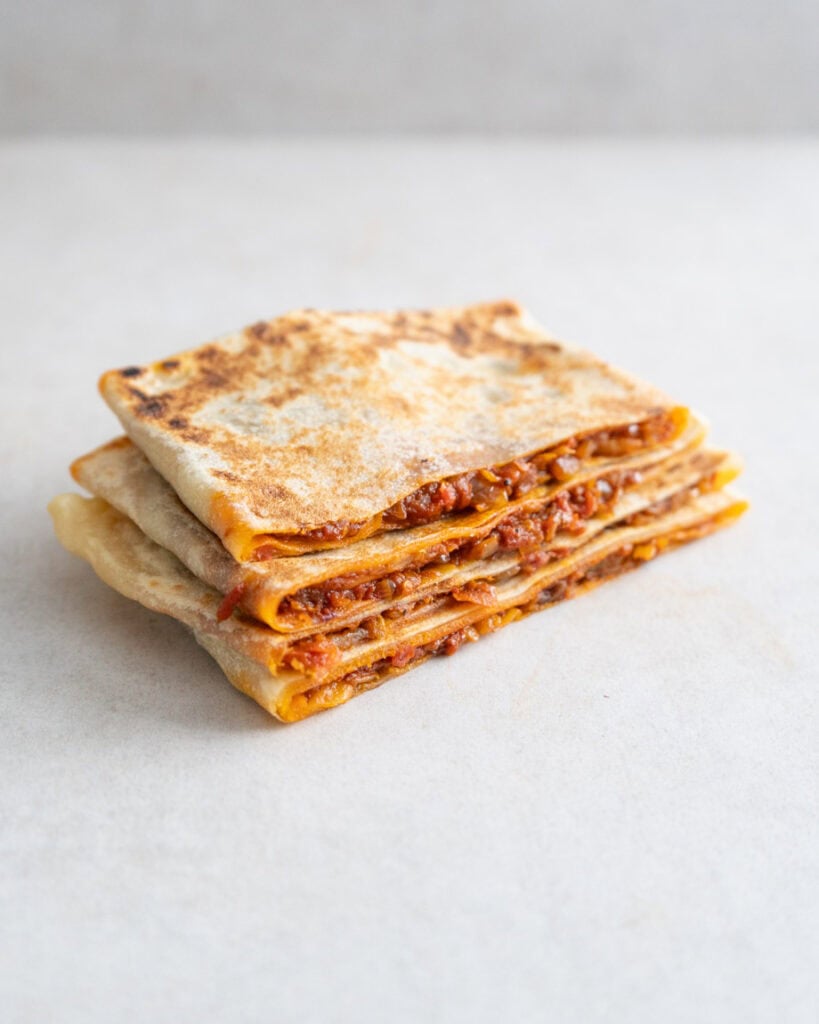
Theres also gözleme which also has a lot of variations that can be considered as vegan
Love gözleme!
Amazing! Thank you so much for all of those suggestions, that’s fantastic! 🙂