
Cucina Povera, Italy’s kitchen of the poor, has long been known for its use of simple, humble ingredients and frugal cooking methods. With a lack of expensive ingredients, resourcefulness became a priceless way to make food more flavoursome and nourishing. And often that resourcefulness would start with making use of leftover bread.
Among poorer communities, bread was considered far too valuable to be thrown away. Instead, it was simply left to naturally dry out, at which point it became an entirely new ingredient for a whole range of dishes. Pappa al Pomodoro is one of them.
When I travelled to Tuscany to explore its naturally vegan dishes for my series Vegan Cultures, food writer Giulia Scarpaleggia showed me how to cook a traditional Tuscan Pappa al Pomodoro. You can find her recipe in her wonderful book Cucina Povera, in which she unearths many of the gems of this part of Italian cuisine.
For my own recipe, I’ve made a few changes to the ingredients and method, but it is still very much inspired by my experience with Giulia, as well as the Pappa I’ve eaten in Tuscan trattorie. To me, the dish really captures the essence of Italian cooking on one spoon. The joyful combination of fresh tomatoes, garlic, olive oil and basil, united by the creamy texture of the soup, gives each mouthful a more satisfying form of eating the perfect Italian tomato sauce.
My Recipe Videos
What is Pappa al Pomodoro?
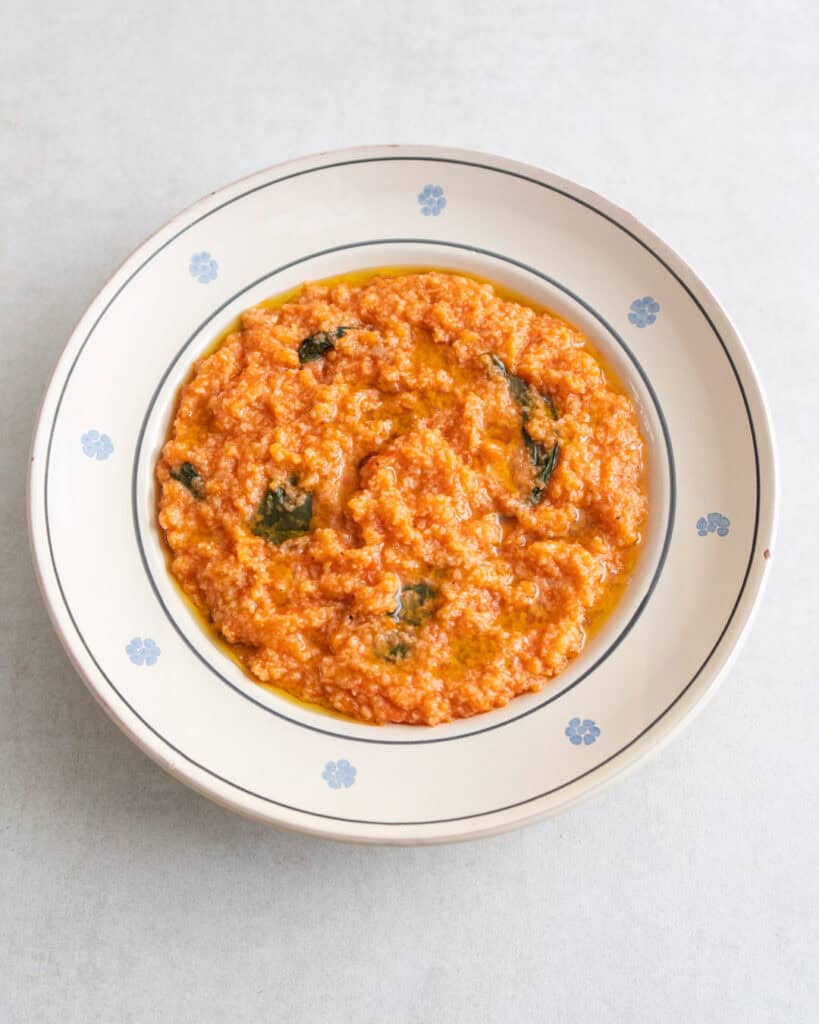
Pappa al Pomodoro is a classic Tuscan bread and tomato soup that is both comforting and delicious. Originating from the rustic kitchens of Italy, this dish is a celebration of simple, high-quality ingredients. Traditionally made with stale bread, ripe tomatoes, garlic, basil, and a generous drizzle of olive oil, Pappa al Pomodoro is known for its thick, porridge-like consistency and rich flavor. It’s a wonderful way to enjoy the bounty of summer tomatoes, but can also be made with canned tomatoes during other parts of the year. This humble yet flavorful soup is a staple in Italian households and offers a taste of Tuscany with every spoonful.
Ingredients you’ll need to make Pappa al Pomodoro (Italian Bread Soup)
To make Pappa al Pomodoro, you’ll need the following ingredients:
- Stale Bread: Ideally, a rustic Italian loaf such as pane toscano, but you can use pretty much any bread you like. The bread should be a few days old for the best texture.
- Ripe Tomatoes: Fresh, red, juicy tomatoes are best, but you can also use canned whole tomatoes if they are not in season or available.
- Olive Oil: Use high-quality extra virgin olive oil for a rich, authentic flavor.
- Garlic: A few cloves, finely grated, to add depth to the soup.
- Tomato Paste (optional): to enhance the colour and flavour of the tomatoes.
- Fresh Basil: A large handful of basil leaves for an aromatic touch throughout the dish.
- Pepper: To give it a subtle kick and enhance the natural flavors of the ingredients.
Saltless Tuscan Bread
Traditionally, Pappa al Pomodoro is made with Tuscan bread, or pane toscano. If you’ve ever unknowingly bitten into a slice of bread in Tuscany, you might have been in for a surprise. Because Tuscan bread is infamously made without salt. The reason for this is widely debated. Some argue that omitting salt allows the bread to go stale quicker, turning it into an ingredient that can be used in other dishes without wasting anything. Others point to the historic salt war between Florence and Pisa. Positioned near the sea, Pisa controlled the salt trade in Tuscany. During disputes between the two cities, Pisa’s salt taxes soared, leading the people of Florence to bake bread without adding salt. Then there’s the theory that the bread is made without salt because it would usually be paired with salty cured meats and cheeses, thereby creating just the right balance.
Whichever the reason, if you do use unseasoned Tuscan bread for this recipe, make sure to add a little bit more salt to the sauce.

What if you don’t have stale bread?
The easiest way to make stale bread is to simply leave it out at room temperature for a few days, or even just overnight. It’ll naturally dry out. But if you don’t have stale bread on the day you’d like to cook the recipe, no problem! You can easily recreate the texture of stale bread by using fresh bread and toasting it. Cut the bread into slices and place it in a low oven (around 120°C) for about 30-40 minutes, or until the bread is dried out but not browned.
The reason for using stale bread is that the dried out bread will absorb the tomato sauce better, giving you a richer flavour, while also breaking down more easily, giving you the authentic texture of Pappa al Pomodoro.
Substitutions
- Bread: You can use any stale bread you have at hand. After all, the idea of the soup is to make use of leftover bread in the first place. Some breads, like rustic sourdoughs, will give the soup a more substantial texture as they won’t break down as easily. For a gluten-free version, simply use gluten-free bread.
- Tomatoes: If fresh tomatoes aren’t available, use high-quality canned tomatoes (see recipe card below)
Recipe Variations
Here are a few variations you might enjoy:
- Spicy Kick: Add a pinch of chilli flakes for a spicy twist that complements the sweet tomatoes.
- Creamy Version: Blend a portion of the soup to create a creamier consistency.
- Broth: use vegetable broth instead of water for a richer flavour.
Feel free to experiment with these variations to make the dish your own!
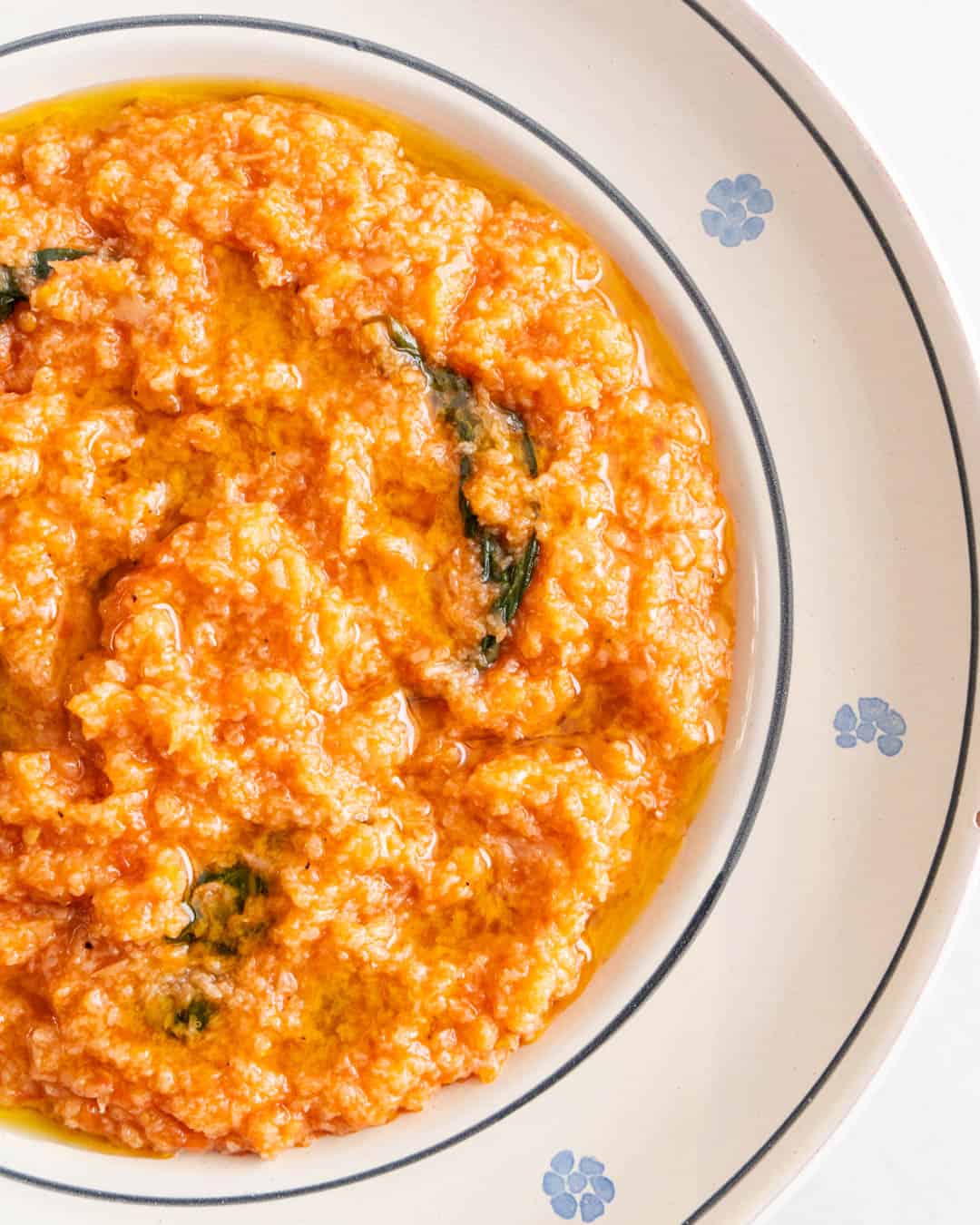
Tips for the perfect Pappa al Pomodoro
- Use a whisk to break down the bread: after cooking the bread in the tomato sauce, a whisk is the best tool to break it down to the consistency of your preference. I usually like to keep it a little chunky, but you can also whisk it further until it’s almost smooth.
- Add half of the oil after cooking: The perfect time to add half to the olive oil is after you turned off the heat. It will give the pappa a luxurious creaminess while retaining the flavour of the oil.
- Serve it at room temperature: allowing the Pappa to cool down to room temperature gives the flavours time to fully develop, while the stew also thickens a little more.
How to make Pappa al Pomodoro
Bring a pan of water to a boil (I use my kettle to speed it up) and fill a bowl with ice (or cold) water. Remove the stem and score an X into the bottom of each tomato. Blanch them for 30–60 seconds, in batches if necessary, then transfer to the cold water. Use a paring knife to peel, halve and core the tomatoes and transfer to a large bowl. Now simply crush them with your hands until coarsely broken down.
Heat 4 tablespoons of the oil in a large casserole over medium-low heat. Peel and finely grate the garlic and sauté in the oil until it just begins to turn golden. Then add the crushed tomatoes, tomato paste and salt, bring to a boil, reduce the heat and simmer covered for 15 minutes. Meanwhile, thickly slice the bread and cut it into chunks. Pick the basil leaves.
Stir the chunks of bread into the tomato sauce and add enough water to generously cover the bread (around 750ml). Return to a boil once more, then reduce the heat again and simmer covered for 10 minutes more until the bread has soaked up most of the liquid and easily breaks apart. Turn off the heat and use a whisk to break the bread into the consistency of your preference. I like to keep it a little chunky. Stir in the basil leaves, black pepper and remaining 4 tablespoons of olive oil, cover with a lid left ajar and set aside for at least 1 hour to let the flavours develop. Divide over deep plates and serve at room temperature with a final drizzle of olive oil.
How to store Pappa al Pomodoro
Store any leftovers in an airtight container in the fridge for 3-4 days.
Other Cucina Povera recipes you might like
- Lolli con Fave (a one-pot dish made with fresh pasta and fava beans)
- Castagnaccio (a cake made from chestnuts)
- Ribollita (Tuscany’s famous bean, bread and vegetable stew)
- Pane e Panelle (Palermo’s chickpea fritters packed into a sandwich)
**I receive a small commission from affiliate links on this page**
Pappa al Pomodoro (Tuscan Tomato and Bread Soup)
Ingredients
- 4 large heirloom tomatoes (800g or 2x 400g cans of plum tomatoes)
- 8 tbsp extra virgin olive oil (plus extra for drizzling)
- 3 large garlic cloves
- 2 tbsp tomato paste (50g)
- 3/4 tbsp salt (10g), 1/4 tbsp (4g) more if using unseasoned bread
- 300 g stale crusty bread (from around 350g fresh bread)
- 30 g fresh basil
- 1/4 tsp freshly ground black pepper
Instructions
- Bring a pan of water to a boil (I use my kettle to speed it up) and fill a bowl with ice (or cold) water. Remove the stem and score an X into the bottom of each tomato. Blanch them for 30–60 seconds, in batches if necessary, then transfer to the cold water. Use a paring knife to peel, halve and core the tomatoes and transfer to a large bowl. Now simply crush them with your hands until coarsely broken down.
- Heat 4 tablespoons of the oil in a large casserole over medium-low heat. Peel and finely grate the garlic and sauté in the oil until it just begins to turn golden. Then add the crushed tomatoes, tomato paste and salt, bring to a boil, reduce the heat and simmer covered for 15 minutes. Meanwhile, thickly slice the bread and cut it into chunks. Pick the basil leaves.
- Stir the chunks of bread into the tomato sauce and add enough water to generously cover the bread (around 750ml). Return to a boil once more, then reduce the heat again and simmer covered for 10 minutes more until the bread has soaked up most of the liquid and easily breaks apart. Turn off the heat and use a whisk to break the bread down into the consistency of your preference. I like to keep it a little chunky. Stir in the basil leaves, black pepper and remaining 4 tablespoons of olive oil, cover with a lid left ajar and set aside for at least 1 hour to let the flavours develop. Divide over deep plates and serve at room temperature with a final drizzle of olive oil.
Notes




This is summer food at its best. I’ve made it so many times this summer that I don’t need to look at the recipe. I am a novice gardener and have 9 tomato plants in my container garden and we are overwhelmed by tomatoes right now! Any tomato works in your recipe – beefsteak, San Marzano, heirloom, purple, or black tomatoes. It’s delicious. Sometimes I add fresh basil or oregano from my garden, and I’ve added a scoop of vegan greek yogurt to my bowl. It may sound weird, but it works for me. Thanks for a great recipe that wastes nothing.
Love that! The joys of tomato season! You’ve gotta make use of the abundance.