
Previously, I’ve made tofu out of chickpeas, green peas, red lentils, black beans and, the traditional one, soybeans. Which is another way of saying that you can make tofu out of pretty much any legume. If you’d like to know more about this, check out my Any Legume Tofu post.
While traditional tofu is essentially made from curdled soybean milk (more on that here), other legume tofus, inspired by Burmese Tofu, are made by simply heating the legume ‘milk’ and letting it coagulate. Fun fact: Peanuts are technically also part of the legume family, however compared to other pulses like peas and beans, they contain a high amount of fat, which means that they don’t coagulate like other liquified legumes do. But when I heard that they have the ability to curdle like soybeans, and can therefore be turned into a tofu similar to soybean tofu, I wanted to give a peanut spread recipe a go.
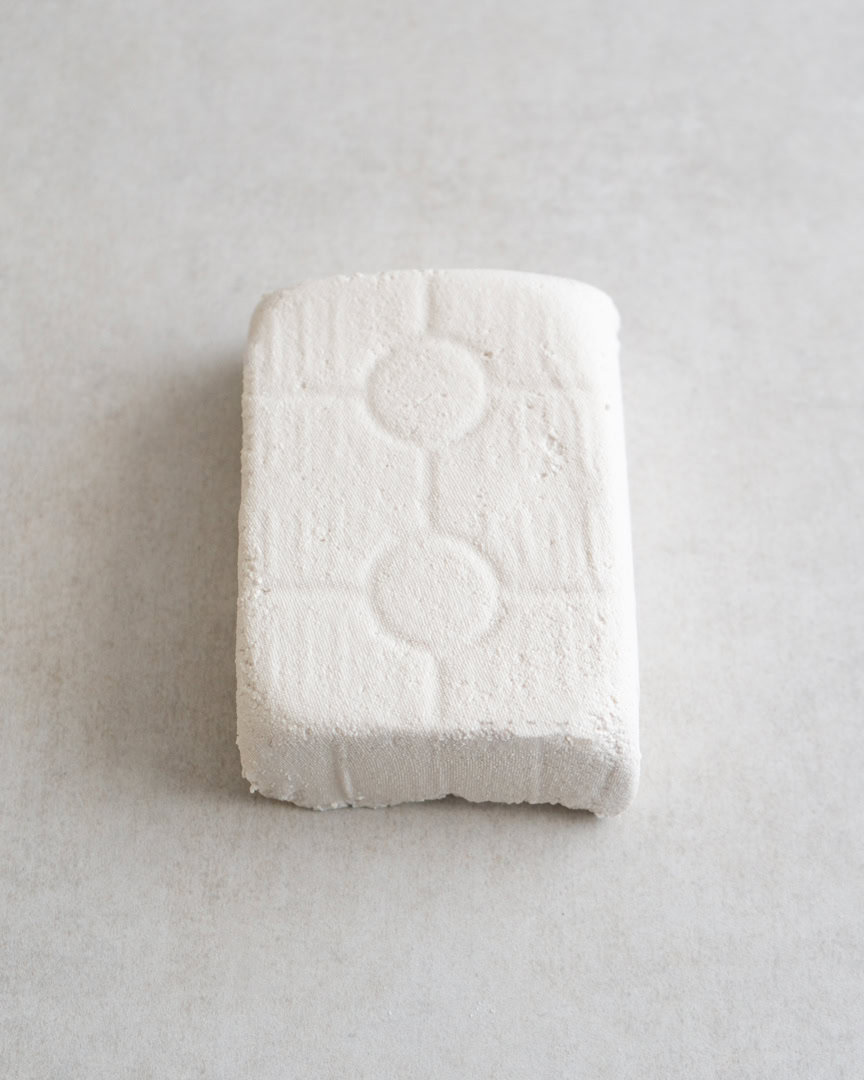
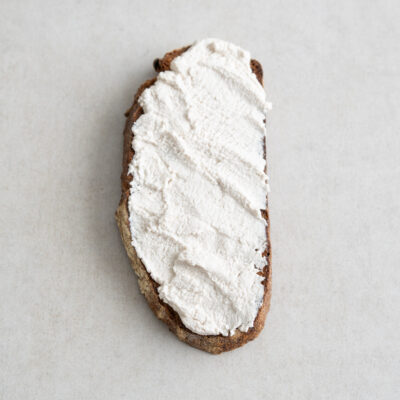
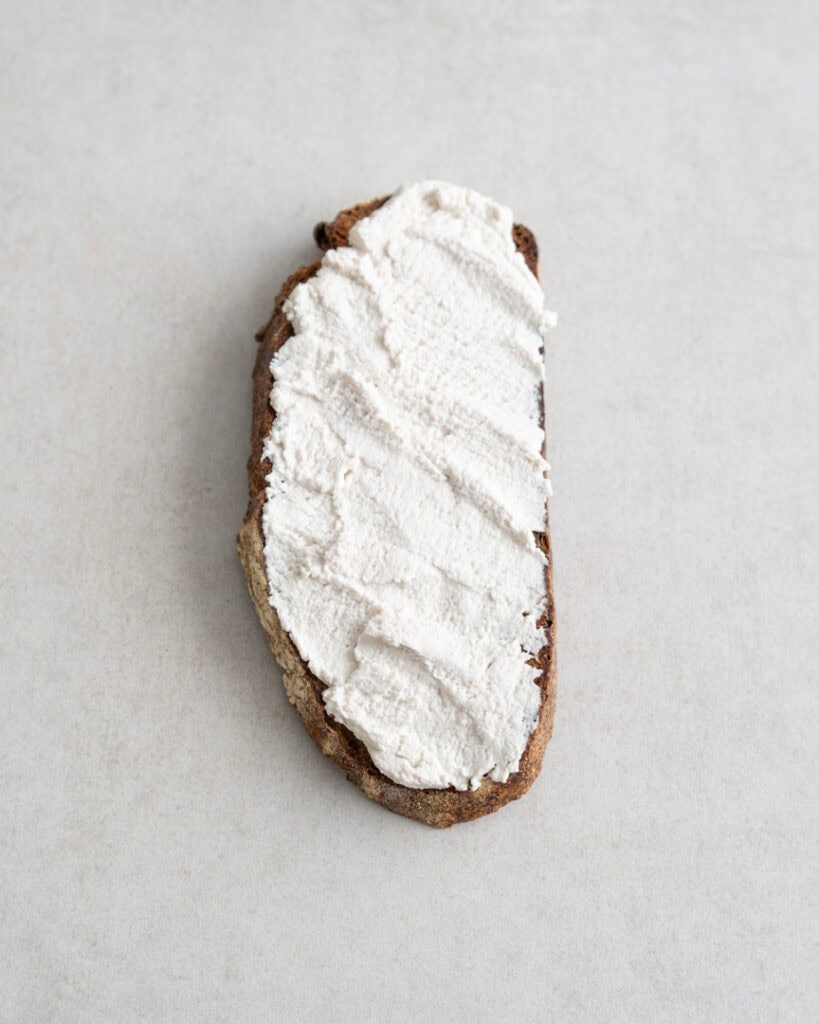
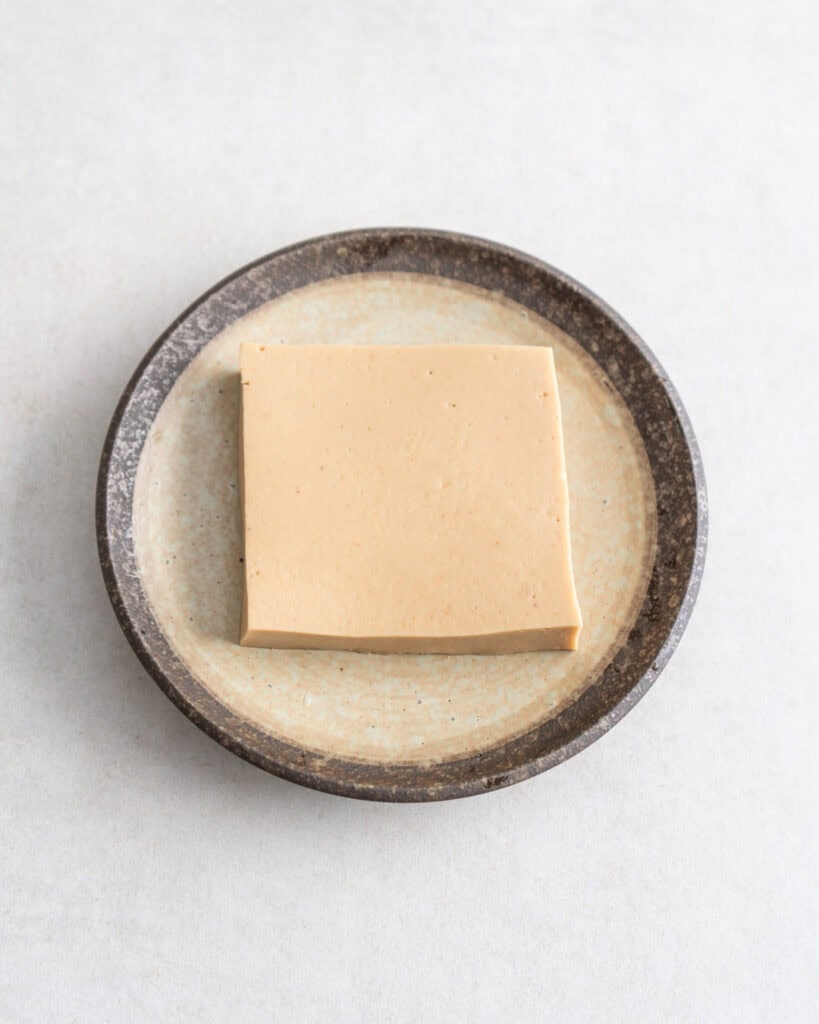
To save you the suspense, it does not work. Yes, peanut milk curdles when heated and mixed with a curdling agent (like vinegar, lemon juice, gypsum or nigari), but the curdles are much finer than those achieved with soybeans and, once strained and pressed, do not turn into a firm texture. Nonetheless, the experiment was not for nothing. Although the result didn’t resemble a tofu, it was actually very similar to a whey cheese (like ricotta) and worked extremely well as a spread on bread, especially if the curdling agent was either lemon juice or vinegar thanks to the flavoursome tang.
My Recipe Videos
This is how I somewhat accidentally discovered the Peanut Spread. It’s certainly not a tofu, but it works as a naturally soy-, dairy- and gluten-free alternative to cheese spreads.
What Are Curdling Agents?
Curdling agents are substances used to coagulate or precipitate proteins, particularly in the process of making cheese, tofu, and similar products. Gypsum and nigari are most common in traditional practices and will yield a slightly better result when curdling soybean or even peanut milk, while lemon juice and vinegar are often used at home due to easier accessibility, but result in slightly finer curds and a tangier flavour.
- Lemon Juice: The acid in lemon juice lowers the pH of milk when added, causing the casein proteins to coagulate and form curds. The resulting curds are typically soft and slightly tangy due to the citric acid in the juice.
- Vinegar: Similar to lemon juice, the acetic acid lowers the pH of milk, leading to protein coagulation and curd formation. The curds formed with vinegar also have a mild acidic taste. Choose a vinegar with 5% acidity if you intend to use it for curdling.
- Gypsum (Calcium Sulfate): Gypsum is a mineral composed of calcium sulfate dihydrate. In tofu production, gypsum is used as a coagulant to solidify the protein and water in soy milk. The calcium ions from gypsum react with the proteins in soy milk, causing them to aggregate and form curds. It’s widely used in traditional Chinese tofu making to produce a soft and smooth texture and is often chosen for its neutral taste and ability to yield a high-quality curd.
- Nigari (Magnesium Chloride): Nigari is derived from seawater and primarily composed of magnesium chloride. It acts as a coagulant by precipitating proteins in soy milk, similar to gypsum but typically results in a slightly firmer texture. Nigari contains other minerals from seawater, which can enhance the nutritional content of the tofu. It is commonly used in Japanese tofu production to produce a firm and slightly brittle texture and is preferred for its traditional use and contribution to the characteristic taste of tofu.
I prefer vinegar or lemon juice for this recipe. It’s easy to use and adds a nice tang to the final product. If you’d like to give Gypsum a go. Dissolve 1 1/2 teaspoons (10g) in 50ml of water and add it instead of the vinegar/lemon juice.
Leftover Pulp
After straining the blended peanuts, you’ll end up with some leftover pulp. This can be mixed into flatbread doughs or used in Müsli.
How to Make Peanut Spread
makes 400-500g
Specialty Equipment
Ingredients
- 300g raw peanuts (skin on)
- 4 tbsp white vinegar or lemon juice (60ml), plus more to taste
Method
Soak the peanuts in at least 1.5l of water overnight.
The next day, drain and rinse the peanuts, then add them to a high-speed blender along with 500ml of water and blend into a thick paste. Add another 250ml of water and blend again.
Place a sieve over a saucepan and line it with muslin cloth. Then strain the peanuts (in batches, if necessary) and squeeze out as much liquid as possible. You can use the leftover pulp in flatbread doughs or in müsli.
Add another 500ml of water to the pan and bring it to a boil while stirring it occasionally to avoid it from sticking. While it’s heating up, measure out the vinegar or lemon juice.
Once it begins to boil, reduce the heat and simmer for 5 minutes, stirring often so that it doesn’t boil over. Then turn off the heat and let it sit for 15-20 minutes to cool down slightly (it should be around 80°C). Add 1 tablespoon of the vinegar (or lemon juice) and gently stir it in, then add another tablespoon and continue this way until the mixture begins to curdle and you’ve used all of the vinegar. Cover the pan with a lid and let it sit for 5 minutes.
Line the sieve again with muslin cloth and place it over a large bowl. Then pour in the curdled peanut milk and let it strain for 1 hour, stirring it occasionally to move the solids and help it strain faster. Once you can wrap the cloth around the solids, squeeze out as much liquid as possible. Then transfer to a tofu press (placed in a shallow plate to catch any residue water), fold the cloth over to make a neat surface and close the press. Place a weight on top (for instance a can of beans), transfer to the fridge and leave to strain overnight.
The next day, remove the spread from the cloth. Add more lemon juice or even vinegar to taste for a slight tang, then use as desired.
Storage
Keep refrigerated in an airtight container for 4-5 days.
**I receive a small commission from affiliate links on this page**
Peanut Spread
Equipment
- 1 High-Speed Blender
- Muslin Cloth
- 1 Tofu Press
Ingredients
- 300 g raw peanuts (skin on)
- 4 tbsp white vinegar or lemon juice (60ml) plus more to taste
Instructions
- Soak the peanuts in at least 1.5l of water overnight.
- The next day, drain and rinse the peanuts, then add them to a high-speed blender along with 500ml of water and blend into a thick paste. Add another 250ml of water and blend again.
- Place a sieve over a saucepan and line it with muslin cloth. Then strain the peanuts (in batches, if necessary) and squeeze out as much liquid as possible. You can use the leftover pulp in flatbread doughs or in müsli.
- Add another 500ml of water to the pan and bring it to a boil while stirring it occasionally to avoid it from sticking. While it’s heating up, measure out the vinegar or lemon juice.
- Once it begins to boil, reduce the heat and simmer for 5 minutes, stirring often so that it doesn’t boil over. Then turn off the heat and let it sit for 15-20 minutes to cool down slightly (it should be around 80°C). Add 1 tablespoon of the vinegar (or lemon juice) and gently stir it in, then add another tablespoon and continue this way until the mixture begins to curdle and you've used all of the vinegar. Cover the pan with a lid and let it sit for 5 minutes.
- Line the sieve again with muslin cloth and place it over a large bowl. Then pour in the curdled peanut milk and let it strain for 1 hour, stirring it occasionally to move the solids and help it strain faster. Once you can wrap the cloth around the solids, squeeze out as much liquid as possible. Then transfer to a tofu press (placed in a shallow plate to catch any residue water), fold the cloth over to make a neat surface and close the press. Place a weight on top (for instance a can of beans), transfer to the fridge and leave to strain overnight.
- The next day, remove the spread from the cloth. Add more lemon juice or even vinegar to taste for a slight tang, then use as desired.



0 Comments