
The first time I made Ajo Blanco was an absolute mess. I can’t recall what recipe I followed, but the ratios were completely off and it included unnecessary steps of passing the blended soup through a sieve. I faintly remember trying to squeeze a pulp-like mix of crushed almonds and wet bread through the fine mash, not knowing at the time what texture I should be expecting.
The experience put me off the idea of Ajo Blanco, until I recently came across it again while researching dishes that are traditionally plant-based. I was hooked once more. There was something so elegant, so satisfying, about the simple presentation and the fact that it is eaten cold. I’m not sure what possessed me during my early attempts, but making a traditional Ajo Blanco couldn’t be easier. There’s no cooking involved, all you need are a few ingredients and either a high-speed or an immersion blender.
My Recipe Videos
What is Ajo Blanco?
Ajo Blanco, also known as “white gazpacho,” is a refreshing, chilled Spanish soup originating from the Andalusian region. It is considered the original gazpacho, dating back to the Moorish middle ages, a time long before tomatoes arrived in Europe. When Moors brought almonds as well as the cultivation of almond trees to Southern Europe, the nut became a staple ingredient in local diets.
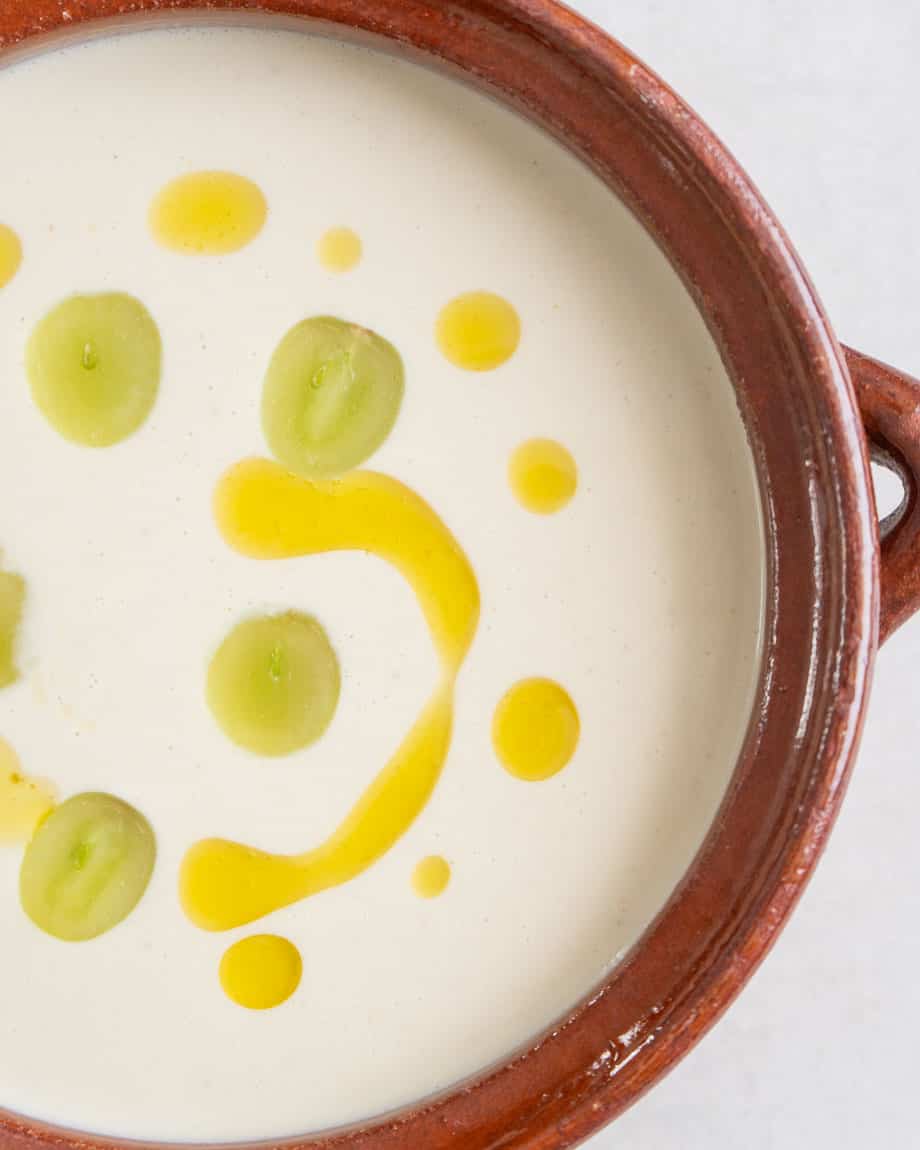
Although Ajo Blanco translates to “white garlic”, the almond is the star of the show and is blended together with bread, garlic, olive oil, water and vinegar for a creamy soup. Traditionally served cold, it’s a simple yet elegant dish that is perfect for warm summer days and just happens to be vegan.
Ingredients You’ll Need & How to Substitute
- Blanched almonds: The base of the soup, providing a creamy texture and nutty flavor.
- Stale bread: Traditionally used to thicken the soup and give it body. If you don’t have stale bread, don’t worry, and see the note below. You can even use fresh bread for this.
- Garlic: Adds a pungent, aromatic depth.
- Extra virgin olive oil: To emulsify the soup into a creamy texture, and for a simple garnish.
- Sherry vinegar: Introduces a tangy brightness – you can use other vinegars like white or red wine instead, or even lemon juice.
- Water: To blend everything into a smooth soup. Some like to add cucumber to the blender instead of some of the water.
- Green grapes: Optional, but often used as a sweet garnish that complements the soup’s savory profile. You can also use pieces of melon.
What if you don’t have stale bread?
The easiest way to make stale bread is to simply leave it out at room temperature for a few days, or even just overnight. It’ll naturally dry out. But if you don’t have stale bread on the day you’d like to cook the recipe, no problem! You can easily recreate the texture of stale bread by using fresh bread and toasting it. Cut the crustless bread into chunks and place them in a low oven (around 120°C) for about 30-40 minutes, or until the bread is dried out but not browned.
How to Make Ajo Blanco (step-by-step)
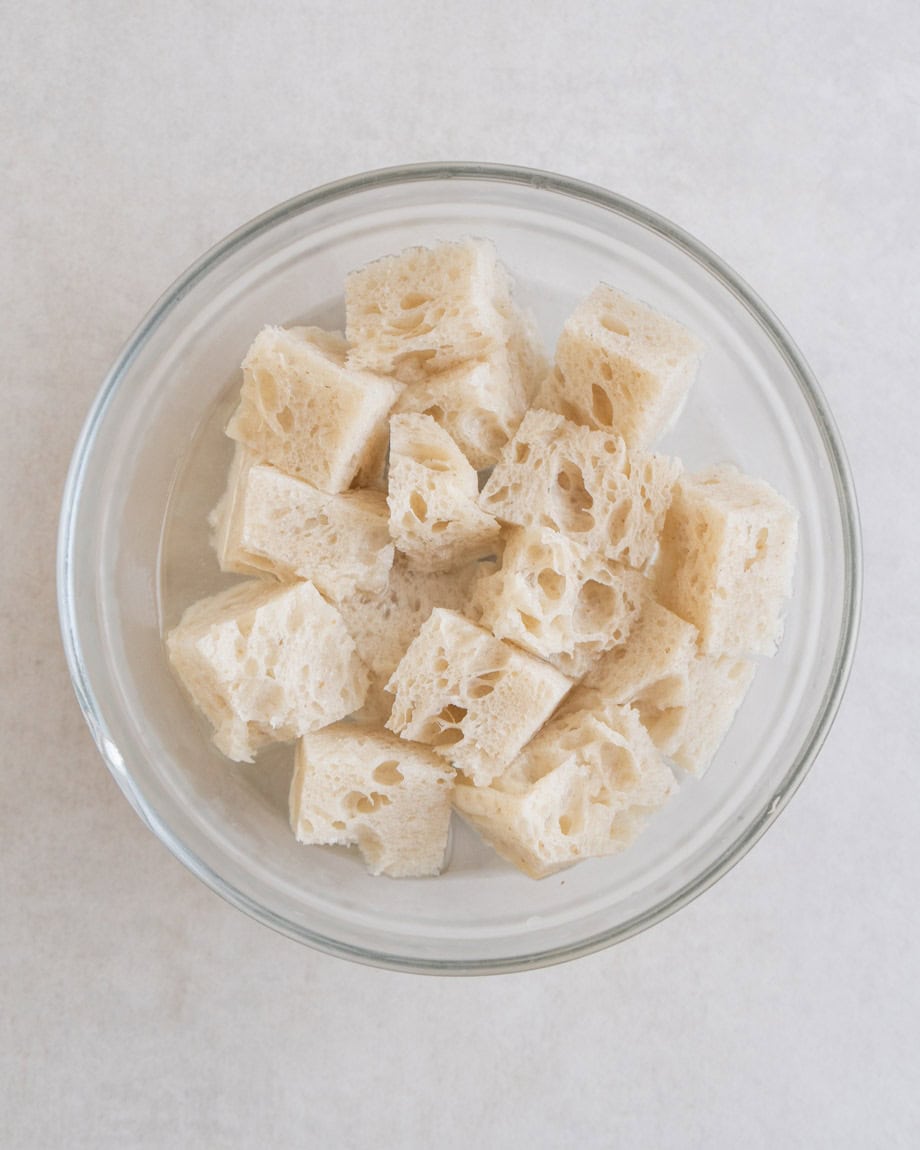
Soak the Bread. Trim away the crusts of the bread until you have 120g of crustless bread (you can dry the leftover crusts and any leftover stale bread, blend them into breadcrumbs and store at room temperature or in the freezer for other recipes). Cut the bread into chunks, add them to a large bowl along with 450ml of cold water and leave to soak in the fridge for 10 minutes.
Blend the Ingredients. Peel the garlic clove, cut it in half and remove the germ (the green bit in the center). Add the garlic halves to a high-speed blender along with the almonds, vinegar, salt, the bread and its soaking liquid. Blend for a minute until smooth, then, with the machine running on low, slowly drizzle in the olive oil like you would do with a mayonnaise to emulsify and thicken the soup.
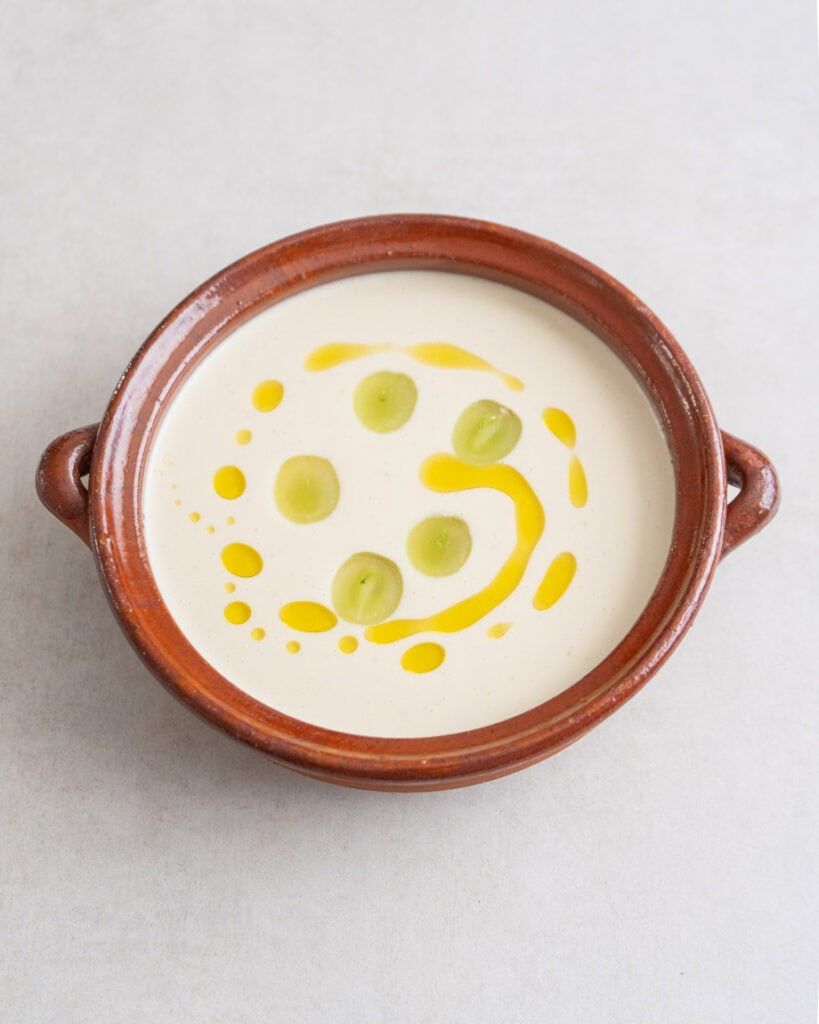
Chill & Serve. Pour the soup back into a bowl and refrigerate for at least 2 hours or overnight. If you want, you can also refrigerate the serving bowls 30 minutes before serving. To serve, thickly slice the grapes. Then divide the soup over the bowls, garnish with the grapes and drizzle with extra olive oil.
Useful Tips
- Extra freshness: Also refrigerate the serving bowls so that the soup doesn’t instantly warm to room temperature.
- Blending: Blend the soup thoroughly to ensure a silky smooth texture. A high-speed blender like the Vitamix E310 works best for this. If you don’t have a high-speed blender, you can also add the ingredients to a jug and blend them with an immersion blender instead.
Why You’ll Love This Recipe
- simple yet sophisticated
- quick to make: it takes just 15 minutes, plus refrigerating
- can be served as an appetizer or a light main course
- perfect remedy for hot days
- no cooking! You won’t need a stove to make Ajo Blanco
- Naturally Vegan
How to Store Ajo Blanco
Store Ajo Blanco in an airtight container in the refrigerator for up to 4 days.
Other Recipes Using Leftover Bread:
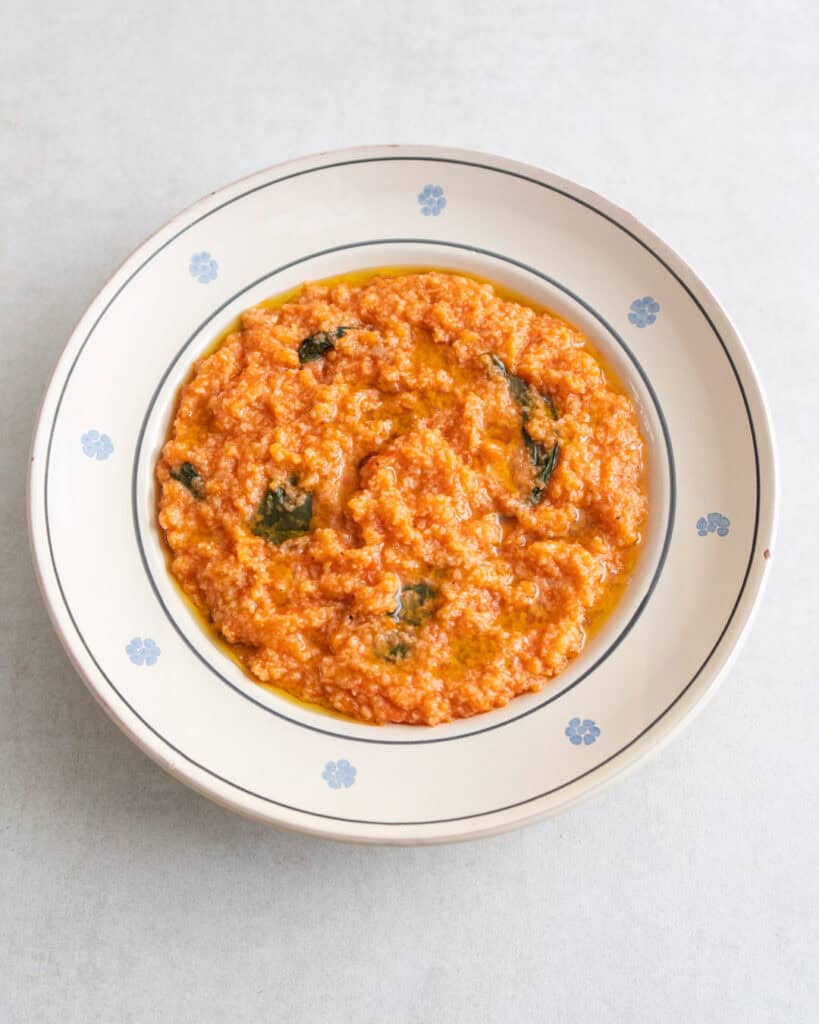
- Pappa al Pomodoro: Tuscany’s famous tomato & bread soup
- Ribollita: A traditional Cucina Povera dish from Tuscany
- Potaje de Garbanzos: A clever method of using bread to thicken the soup
**I receive a small commission from affiliate links on this page**
Ajo Blanco (Spanish Bread & Almond Soup)
Ingredients
- 200 g stale bread (from around 220g fresh bread)
- 1 large garlic clove
- 100 g raw blanched almonds
- 1 tbsp sherry vinegar (15g)
- 1 tsp salt (7g)
- 5 tbsp extra virgin olive oil (50g plus extra for finishing)
- A small handful of green grapes (4-6)
Instructions
- Trim away the crusts of the bread until you have 120g of crustless bread (you can dry the leftover crusts and any leftover stale bread, blend them into breadcrumbs and store at room temperature or in the freezer for other recipes). Cut the bread into chunks, add them to a large bowl along with 450ml of cold water and leave to soak in the fridge for 10 minutes.
- Peel the garlic clove, cut it in half and remove the germ (the green bit in the center). Add the garlic halves to a high-speed blender along with the almonds, vinegar, salt, the bread and its soaking liquid. Blend for a minute until smooth, then, with the machine running on low, slowly drizzle in the olive oil like you would do with a mayonnaise to emulsify and thicken the soup. Pour it back into a bowl and refrigerate for at least 2 hours or overnight. If you want, you can also refrigerate the serving bowls 30 minutes before serving.
- To serve, thickly slice the grapes. Then divide the soup over the bowls, garnish with the grapes and drizzle with extra olive oil.








What drew me in was the simplicity. Plus, it looks so pretty. I used sourdough and just wow. I’d never heard of this before and had no idea what to expect. Stale bread soaked in water???? A cold soup??? I’ve actually never tried gazpacho, so this is all new to me. Also, I love the history behind it. Thanks Hermann!
You’re very welcome! And exactly, it’s so simple but really delivers on flavour. I’m glad you liked it!