
Chutneys are a powerful way to enrich a great many Indian dishes with varying flavors and textures. To add a little bit of heat, Kara Chutney is a fiery asset to have in your chutney repertoire.
My Recipe Videos
What is Kara Chutney?
Kara Chutney is a popular South Indian condiment characterized by its vibrant red color and tantalizing blend of aromatics and is often served alongside Dosa or Idli. The word “kara” in Tamil means “spicy,” which perfectly describes the chutney’s bold and fiery taste.
The origins of Kara Chutney can be traced back to the vibrant kitchens of South India, where chutneys have been an integral part of the cuisine for centuries. Chutneys, in general, were developed as a way to preserve seasonal fruits and vegetables, and each region in India has its unique take on these flavorful condiments. Kara Chutney specifically gained popularity in the southern states of Tamil Nadu, Andhra Pradesh, and Karnataka.
Ingredients You’ll Need & How to Substitute
To create an authentic Kara Chutney, you’ll need the following ingredients:
- Kashmiri Chilis: Dried red chilis give the chutney its characteristic heat. You can use kashmiri chili powder or red chili powder instead and adjust the quantity to your preference.
- Tomatoes: Fresh, ripe tomatoes form the base of the chutney, providing a tangy and slightly sweet flavor
- Onions: Traditionally, pearl onions give the chutney its slightly sweeter flavor. You can use shallots or even normal onions instead.
- Garlic: A few cloves of garlic enhance the overall flavor with their aromatic and savory notes.
- Seedless Tamarind: A small piece of tamarind adds a tangy zing, balancing the spiciness of the chilis. Use tamarind paste if seedless tamarind is hard to get.
- Curry Leaves: These leaves infuse the chutney with a distinct, aromatic flavor typical of South Indian cuisine. As part of the tempering, they are optional.
How to make Kara Chutney (step-by-step)
Here’s a step-by-step guide to making Kara Chutney:
Fry the Chilis and Dal: Trim the kashmiri chilis. Heat 1/2 tablespoon of the oil over medium-low heat in a frying pan and sauté the chana dal and kashmiri chilis until the dal begins to turn golden (3-4 minutes). Add the urad dal and continue frying until it is golden as well (1-2 minutes). Transfer to a shallow bowl and set aside.

Sauté the Remaining Ingredients: Peel and finely slice the shallots or onion and peel the garlic cloves. Heat the remaining oil in the pan and sauté the shallots and garlic until the shallots soften (4-5 minutes). Meanwhile, dice the tomato.
Add the diced tomato, tamarind and salt and continue cooking until the tomatoes are soft (4-5 minutes).
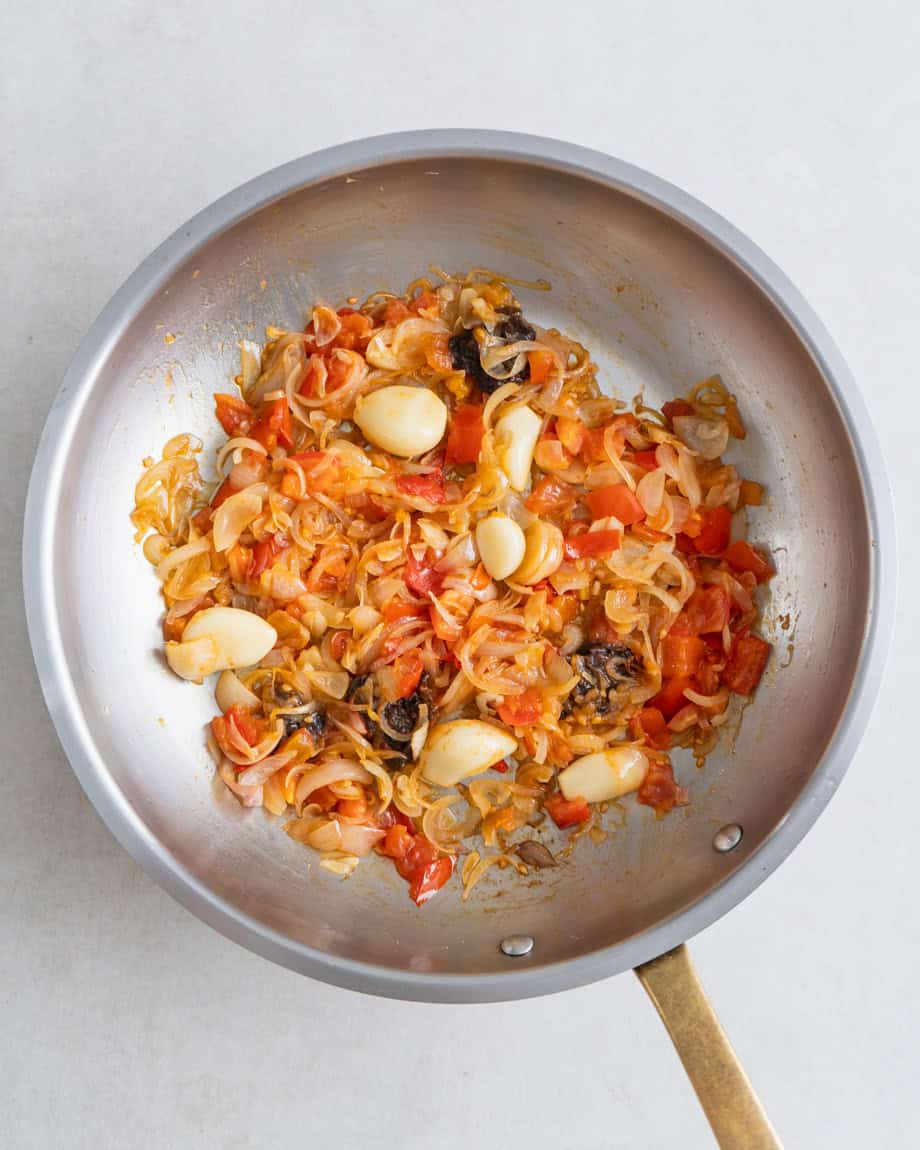
Blend the Mixture: Tip everything in a bowl and let it cool for 15 minutes, then transfer to a blender along with the toasted dal and chllies and blend with 140ml cold water into a thick chutney. Transfer to a bowl.
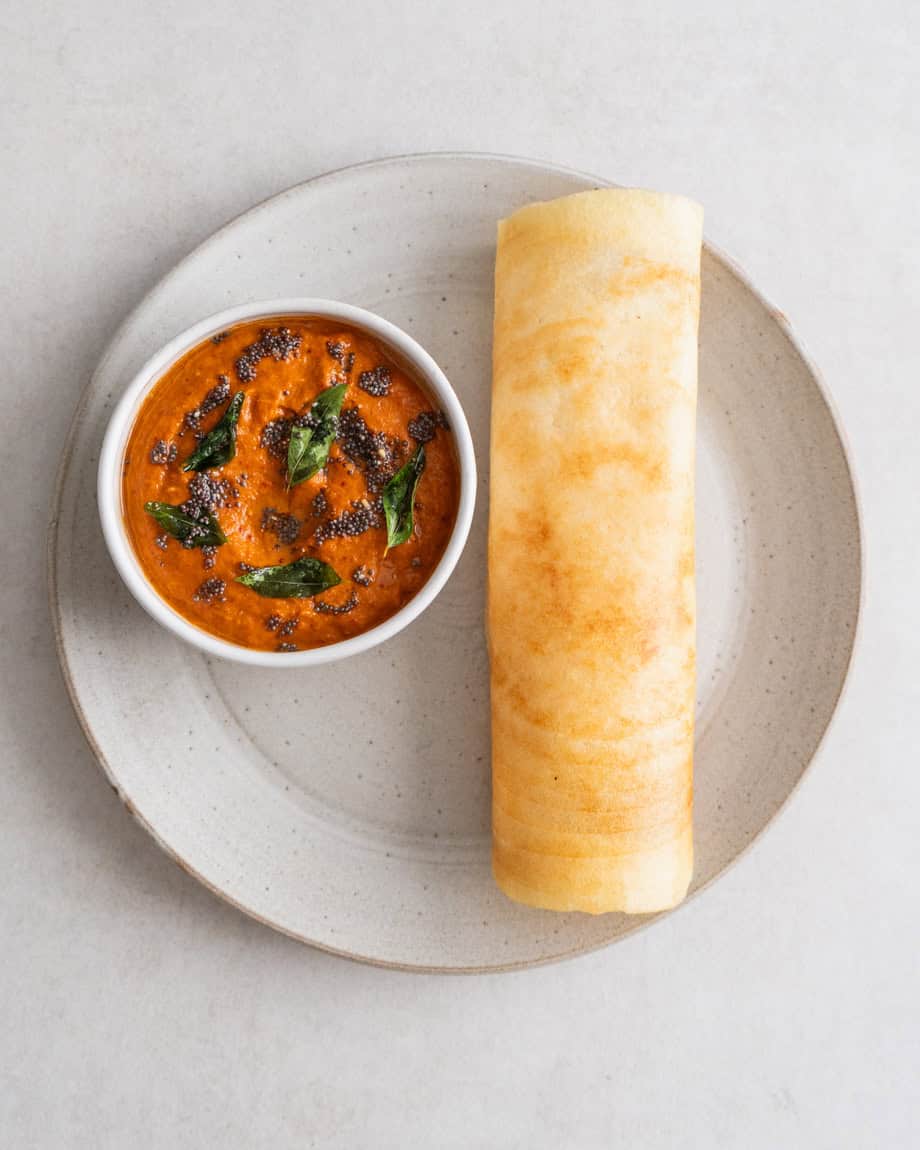
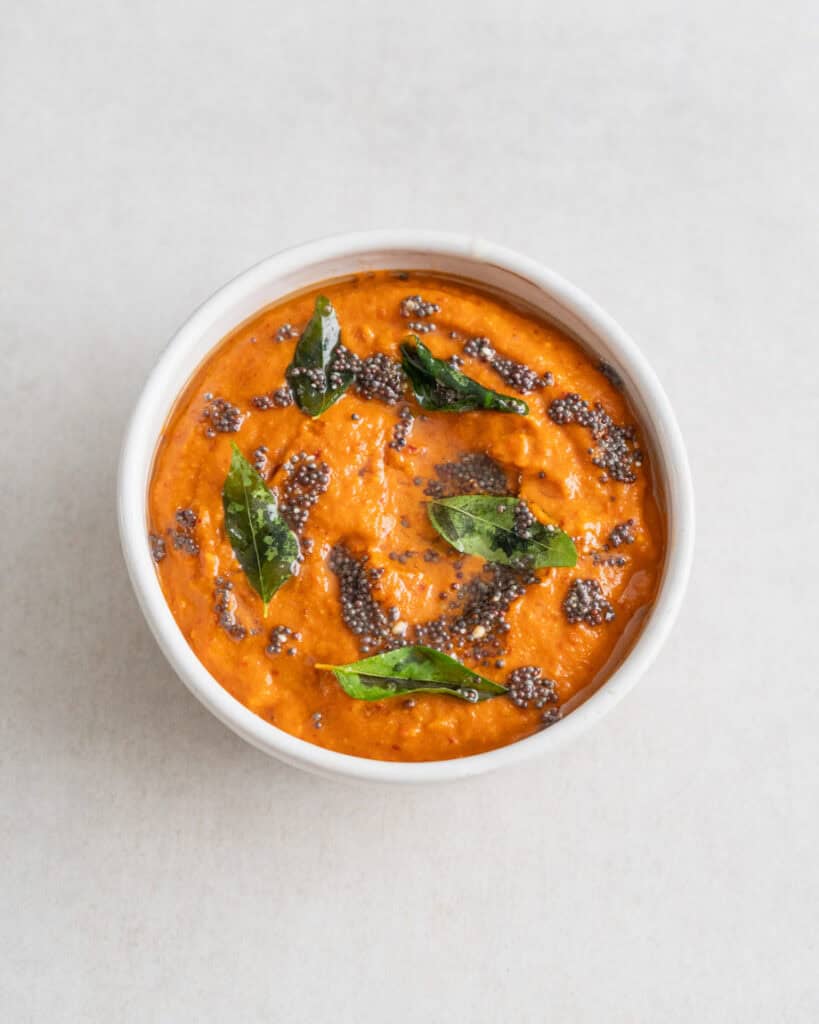
Temper the Chutney: For the tempering, heat the oil in a small pan. Add the mustard seeds and, as soon as they begin to sizzle vigorously, the curry leaves and asafoetida. Cook for a few seconds until the leaves are crispy, then pour the tempering over the chutney. Mix it in and serve with Dosa, Idli or Kuzhi Paniyaram.
Useful Tips
Here are some handy tips to ensure your Kara Chutney turns out perfect every time:
- Adjust the Spice Level: The spiciness of Kara Chutney can be easily adjusted by varying the number of red chilis. Start with fewer chilis and add more as needed, keeping in mind that it’ll affect the color as well.
- Consistency: Adjust the thickness of the chutney by either adding a little less or a little more water to the blender.
- Extra Crunch: For a nutty crunch, add some Urad Dal to the mustard seeds in the tempering and fry them until golden before continuing with the rest,
Why You’ll Love This Kara Chutney Recipe
- Vegan: It happens to be traditionally and naturally vegan.
- Easy to Make: With just a few simple ingredients and straightforward steps, you can whip up this chutney in no time.
- Versatile: Kara Chutney pairs well with a variety of dishes, from breakfast staples like idli and dosa to snacks like paniyaram
- Customizable: Easily adjust the heat and tanginess to suit your palate, making it a flexible recipe for everyone.
- Healthy: Made with fresh, wholesome ingredients, this chutney is a healthy addition to your meal.
How to Store Kara Chutney
- Refrigeration: After preparing the chutney, allow it to cool completely. Transfer it to a clean, airtight container and store it in the refrigerator. It can stay fresh for up to 7 days.
- Freezing: For longer storage, Kara Chutney can be frozen. Pour the chutney into freezer-safe containers or ice cube trays and freeze.
Other Indian Chutneys You Might Like
- Coconut Chutney: a refreshing chutney served alongside Idli and Dosa
- Dry Garlic Chutney: a coconut, peanut and garlic chutney served with Vada Pav
- Coriander Chutney: a fresh coriander chutney served with Vada Pav
- Tamarind Chutney: a sweet and tangy tamarind chutney served with Vada Pav
**I receive a small commission from affiliate links on this page**
Kara Chutney (Spicy Indian Garlic, Onion and Tomato Chutney)
Ingredients
Chutney
- 6 dried kashmiri red chilis
- 1 1/2 tbsp vegetable oil
- 1 tsp chana dal
- 1 tsp urad dal
- 200 g shallots (or 1 large onion)
- 6 large garlic cloves
- 1 large tomato (150g)
- 20 g tamarind (1 tbsp)
- ½ tsp salt (4g)
Tempering
- 1/2 tbsp vegetable oil
- 1 tsp mustard seeds
- 1/8 tsp asafoetida
- A small handful of curry leaves (6-8)
Instructions
- Trim the kashmiri chilis. Heat 1/2 tablespoon of the oil over medium-low heat in a frying pan and sauté the chana dal and kashmiri chilis until the dal begins to turn golden (3-4 minutes). Add the urad dal and continue frying until it is golden as well (1-2 minutes). Transfer to a shallow bowl and set aside.
- Peel and finely slice the shallots or onion and peel the garlic cloves. Heat the remaining oil in the pan and sauté the shallots and garlic until the shallots soften (4-5 minutes). Meanwhile, dice the tomato.
- Add the diced tomato, tamarind and salt and continue cooking until the tomatoes are soft (4-5 minutes). Tip everything in a bowl and let it cool for 15 minutes, then transfer to a blender along with the toasted dal and chilis and blend with 140ml cold water into a thick chutney. Transfer to a bowl.







Wow
Thanks!
Awesome
Thank you! 🙂