
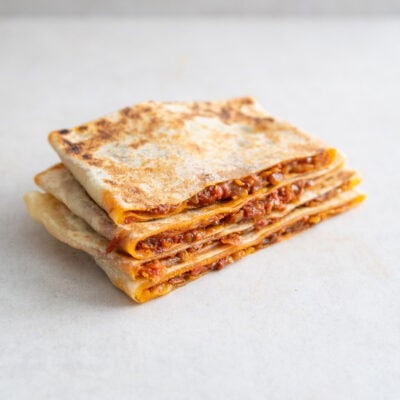
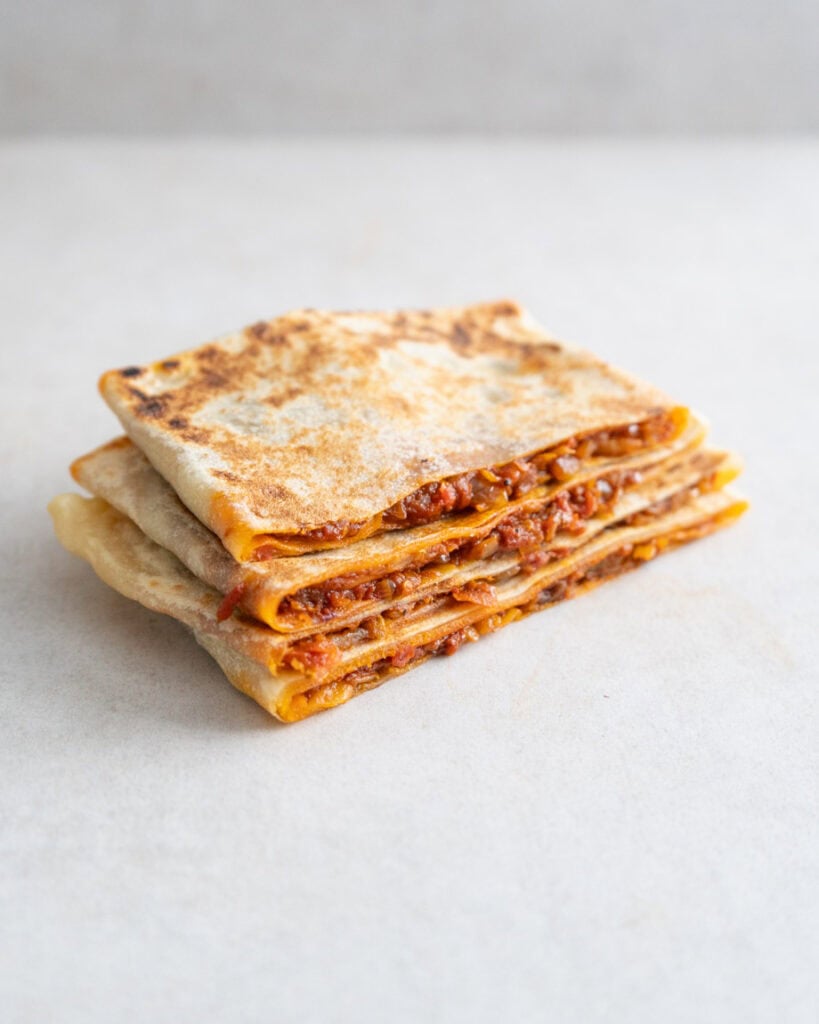
Upgrade your flatbread game with these Algerian Mhajeb. Flatbreads are delightful, especially when stuffed, but Mhajeb take it to the next level. The dough is stretched out so thin that you can literally see your hand through it. The result is incredible soft layered flatbreads that are only made better by the spicy onion stuffing.

My Recipe Videos
What is Mhajeb?
Mhajeb, also known as Mhadjeb or Mahdjouba, is a traditional Algerian dish that is beloved for its satisfying texture and aromatic filling. This savory flatbread is made from thinly stretched out semolina dough and stuffed with a mixture of onions, tomatoes, garlic, harissa and spices. It’s a staple in Algerian cuisine, is commonly enjoyed as a street food snack or as a meal cooked at home and is traditionally vegan.
Ingredients You’ll Need & How to Substitute
- Semolina Flour: This is the key ingredient for making the dough. Semolina is high in gluten and gives Mhajeb its unique texture and flavor. If you can’t get semolina flour, use bread flour instead.
- Plain Flour: Used in combination with semolina to create a pliable and easy-to-work-with dough.
- Salt: Flavours the dough but also strengthens the gluten strands.
- Olive Oil: Added to the dough to give it elasticity and make it easier to stretch out.
- Onions: The base of the filling, caramelised until golden.
- Tomatoes: Gives the filling a rich umami flavour as well as a thick sauce-like texture. You can also use fresh, diced tomatoes.
- Tomato Paste: Gives the filling a rich body.
- Garlic: Adds a pungent and aromatic note to the filling.
- Harissa Paste: For a fiery kick. Substitute with a spicy pepper pastes or use more tomato paste and some chilli powder.
- Ras el Hanout: A spice mix that gives the filling an aromatic flavour. You can also simply use cumin instead for a slightly different flavour.
How to Make Mhajeb (step-by-step)
Make the Filling. Heat the oil in a pan over medium-low heat. Finely chop the onions and sauté until golden (10-12 minutes). Finely grate the garlic, add to the pan and cook for 1 minute until aromatic. Then stir in the tomato paste, harissa, ras el hanout and pepper. Once fragrant add the salt and plum tomatoes, crushing them with a spoon. Bring to a boil, then reduce the heat and cook for around 20 minutes, stirring often, until the liquid has reduced entirely. Set aside and allow to cool to room temperature.
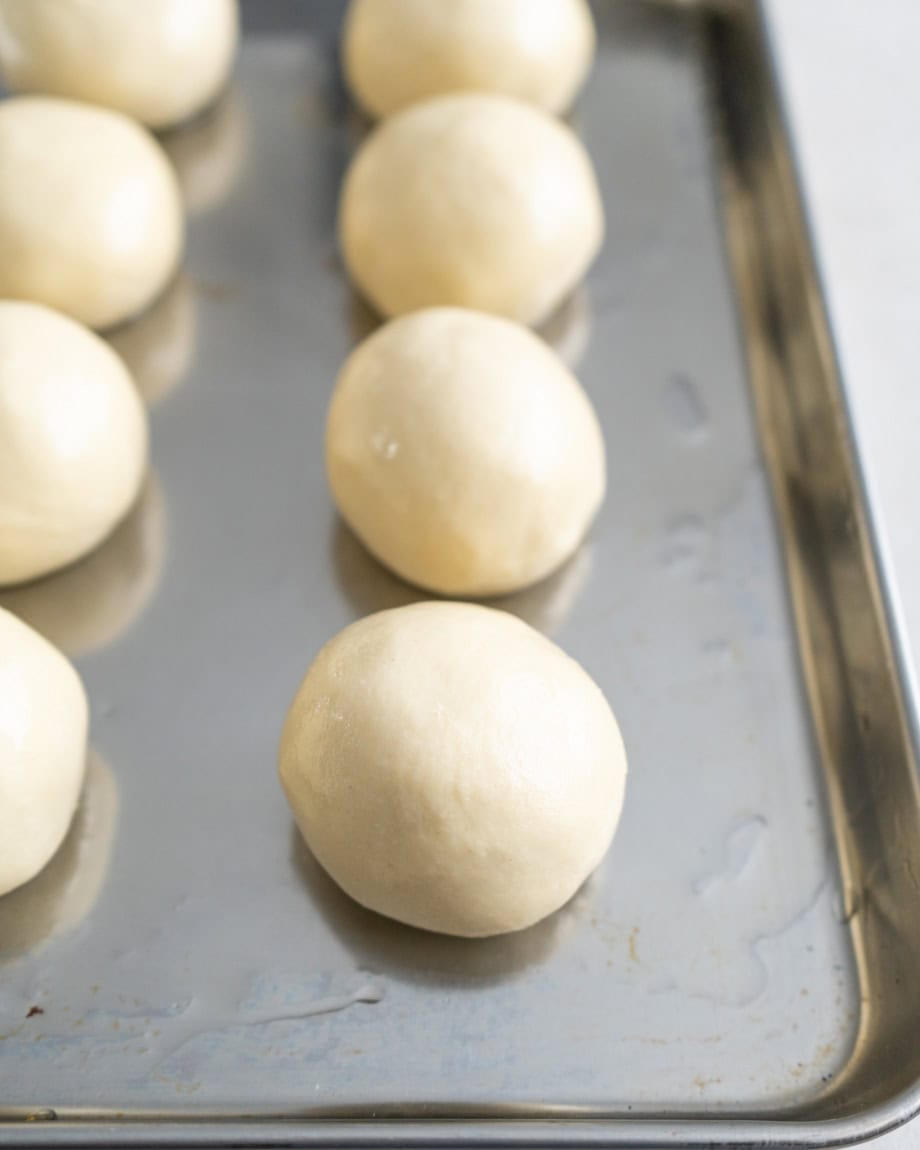
Prepare the Dough. Meanwhile, mix together the ingredients for the dough, tip it out onto a clean work surface and knead it for around 10 minutes until smooth. Divide the dough into 8 equal pieces (75-80g each). Grease a baking tray with a little oil, then shape the dough pieces into balls, coat each with a little oil as well and place them on the tray. Cover the tray with a reusable plastic bag or damp kitchen towel and let the dough rest for 30 minutes. Preheat a heavy-bottom pan over medium heat.
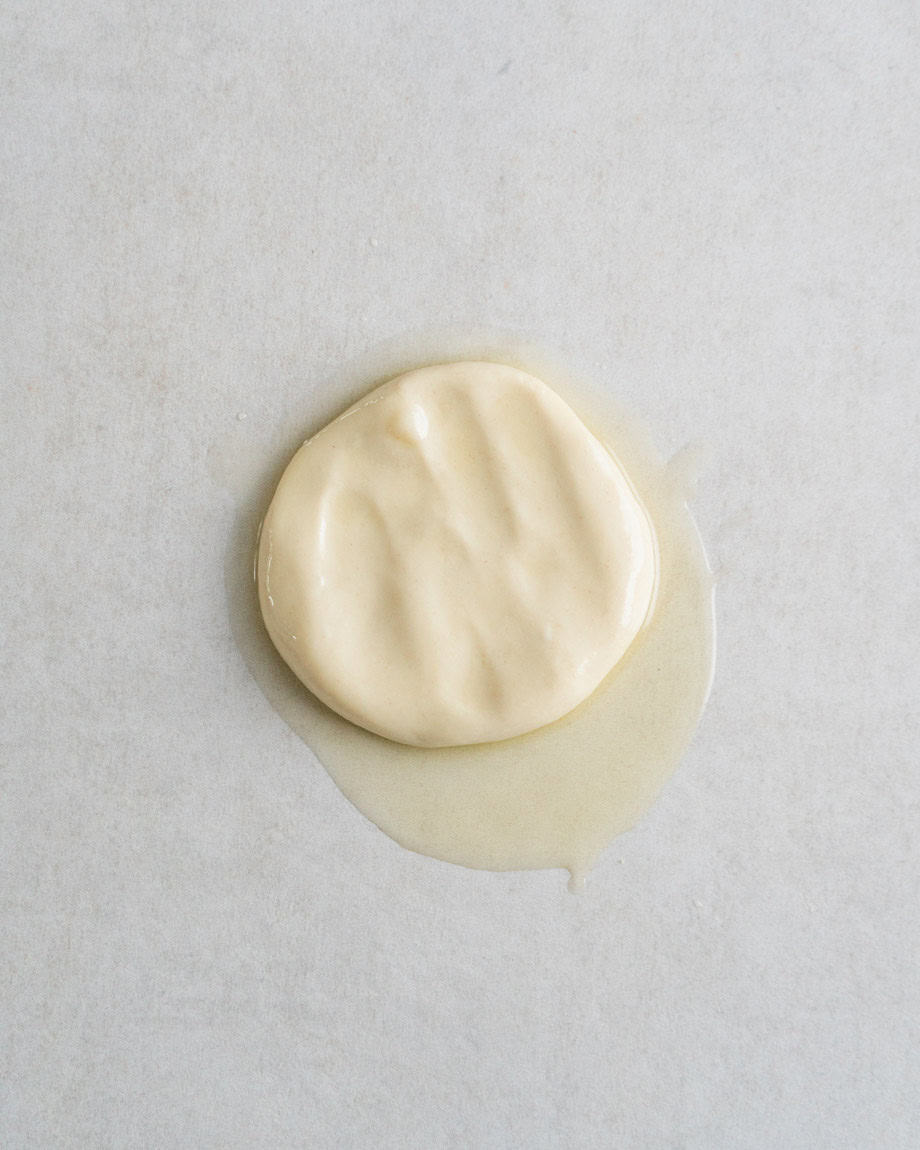
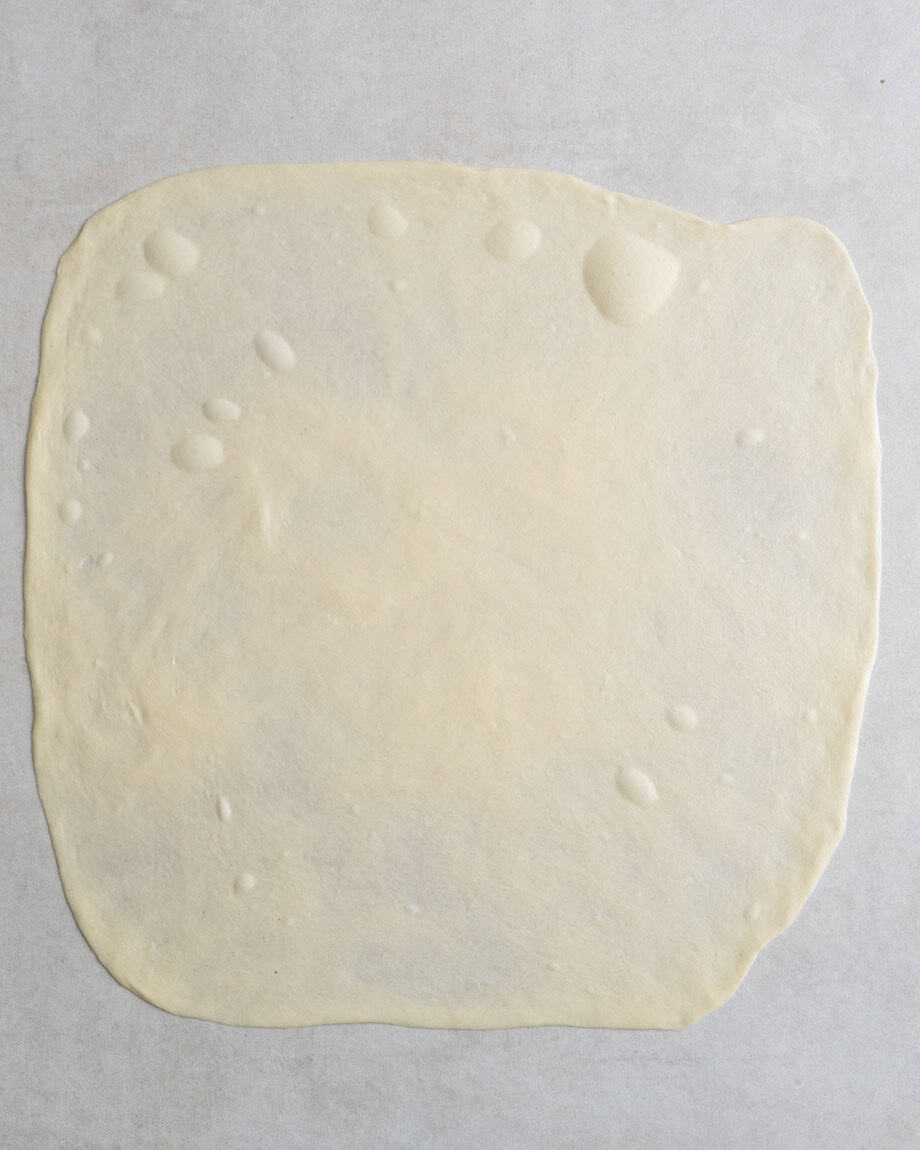
Roll Out the Dough. Coat a smooth work surface with 1 tablespoon of oil and place one dough ball on top. Using your hands, press and stretch the dough into a square thin enough that you can easily see the work surface through it, roughly 35cm x 35cm.
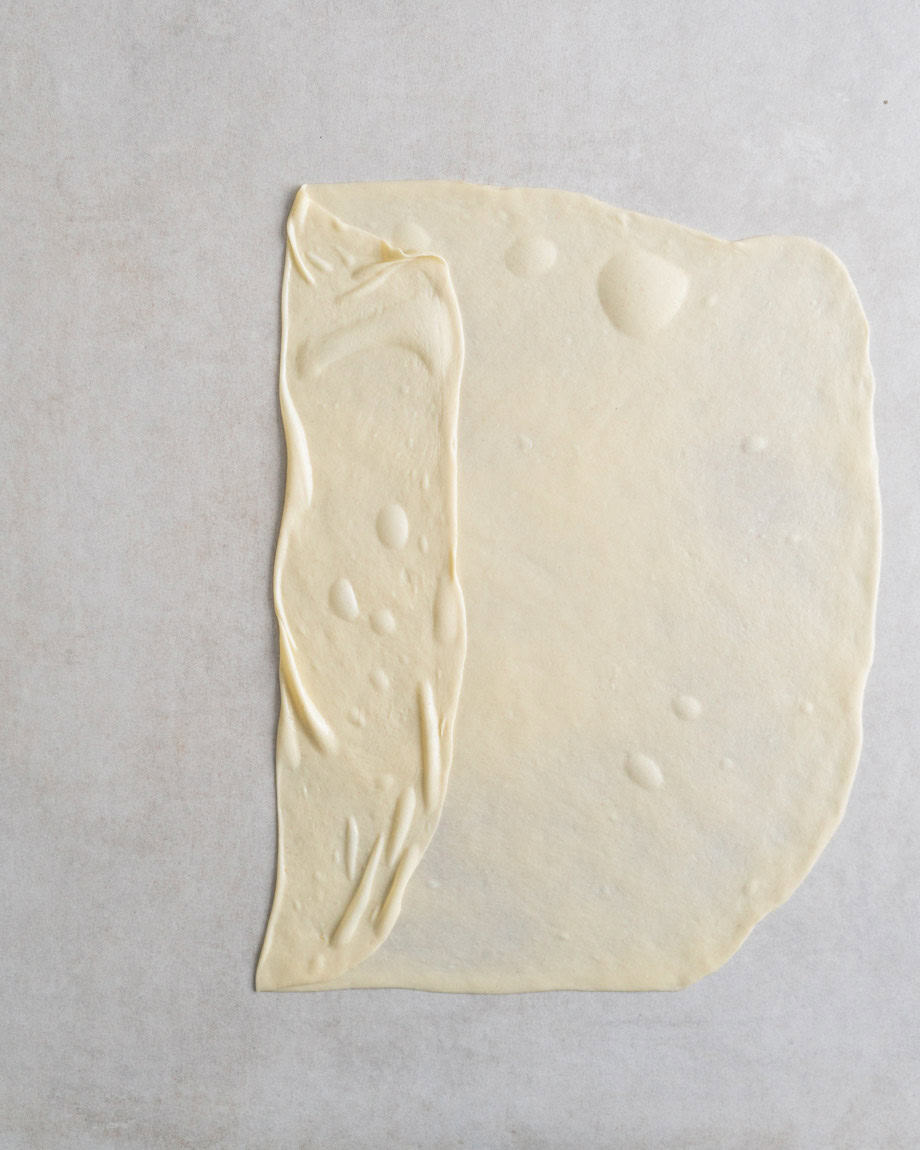
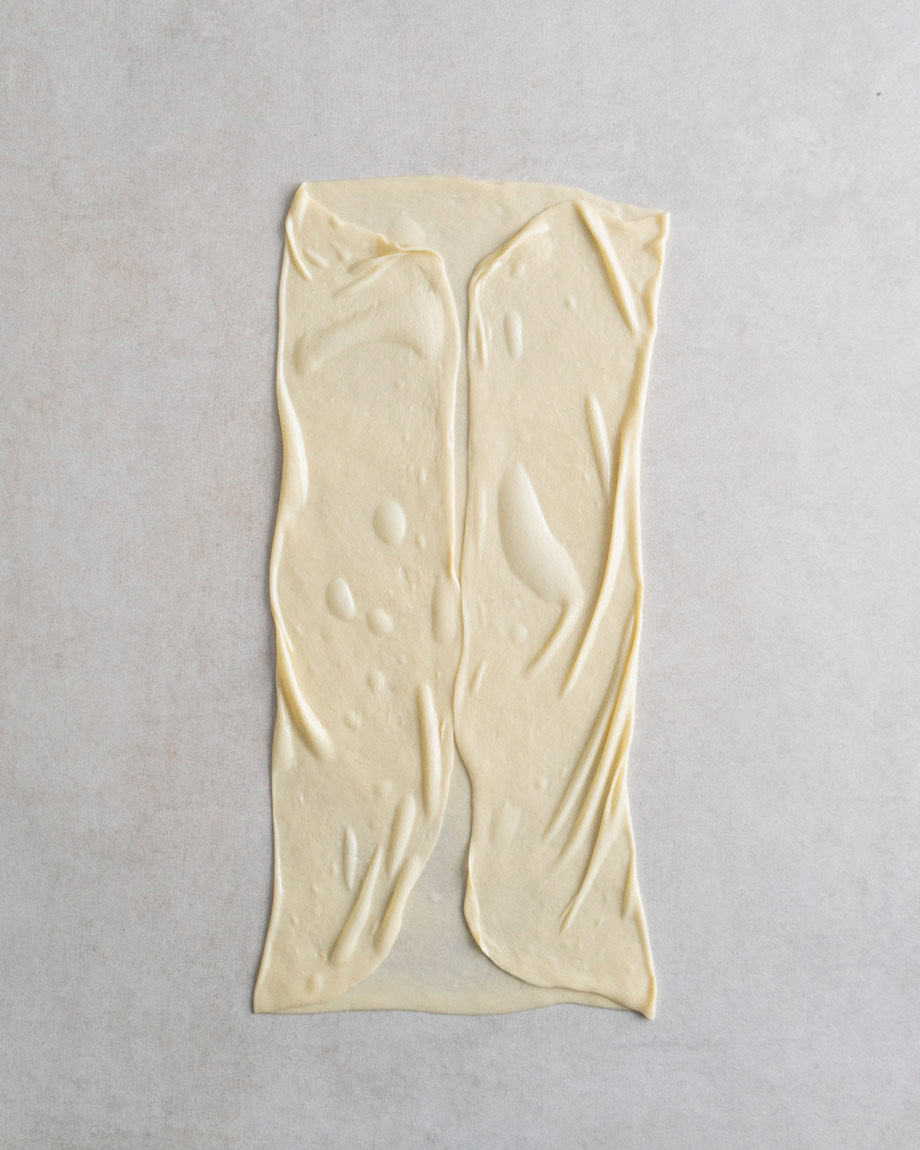
Fold and Fill. Fold the left and right side towards each other so that they just about meet in the middle.
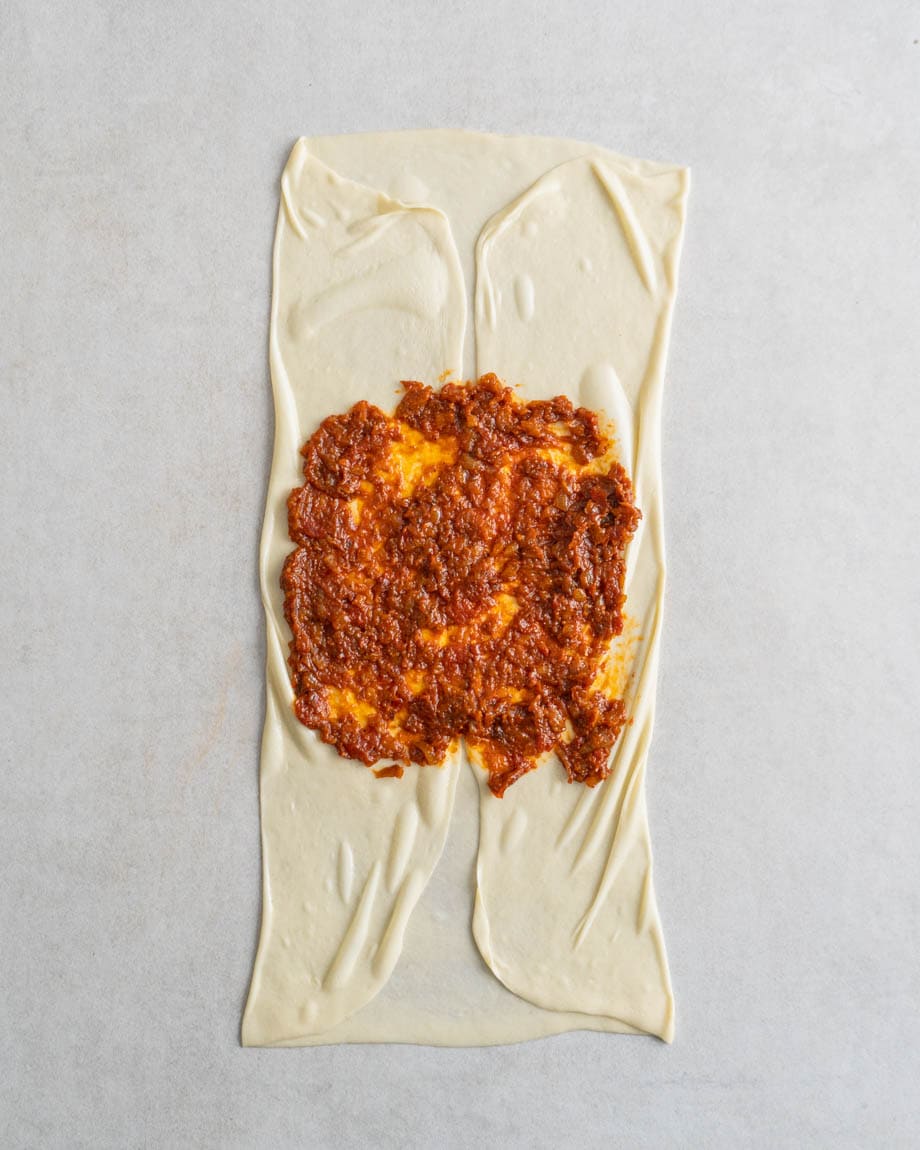
Then add 1 large tablespoon of the filling in the middle and spread it out into a square, leaving a little bit of space towards the left and right edge.
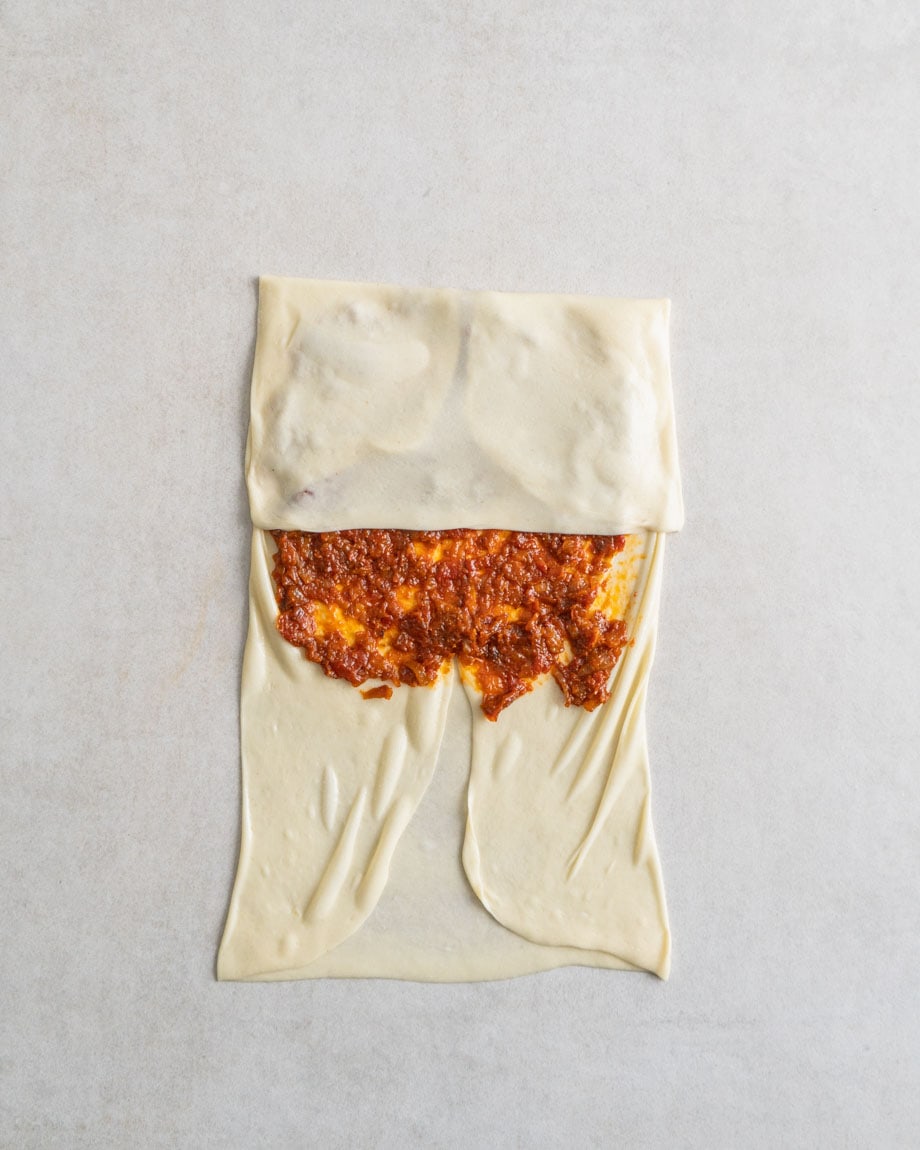
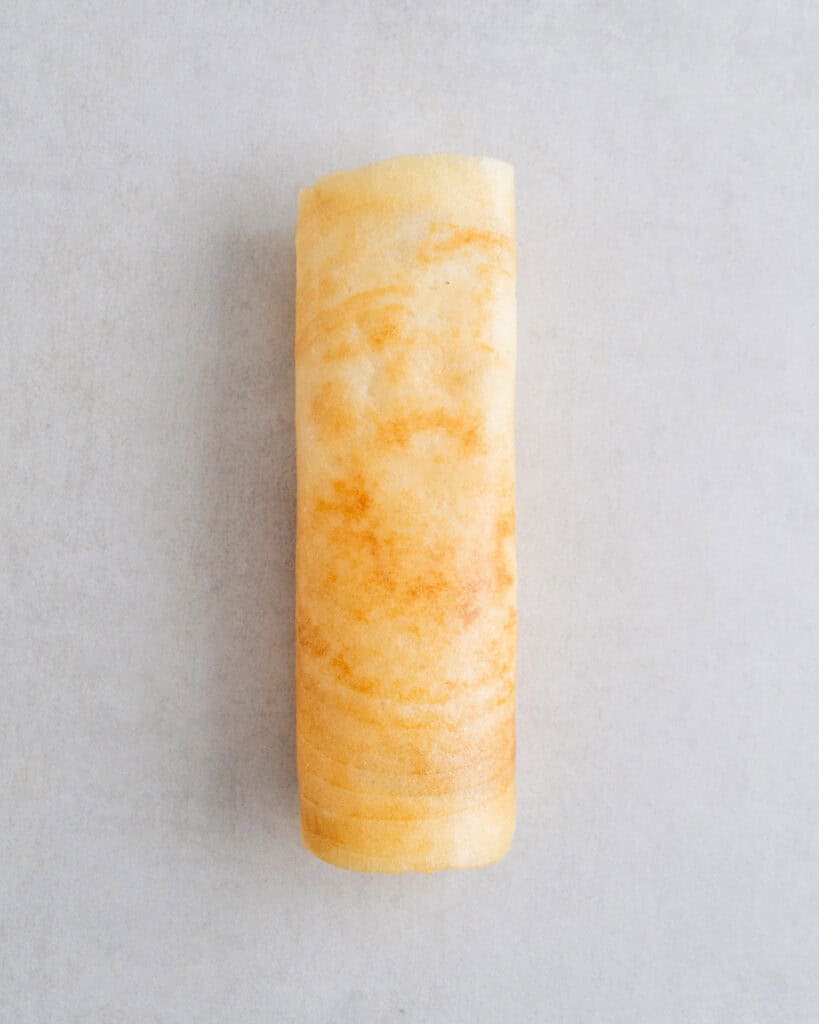
Fold the top edge towards the centre, then fold over the bottom edge to seal it, gently pressing it around the sides to prevent the filling from squeezing out.
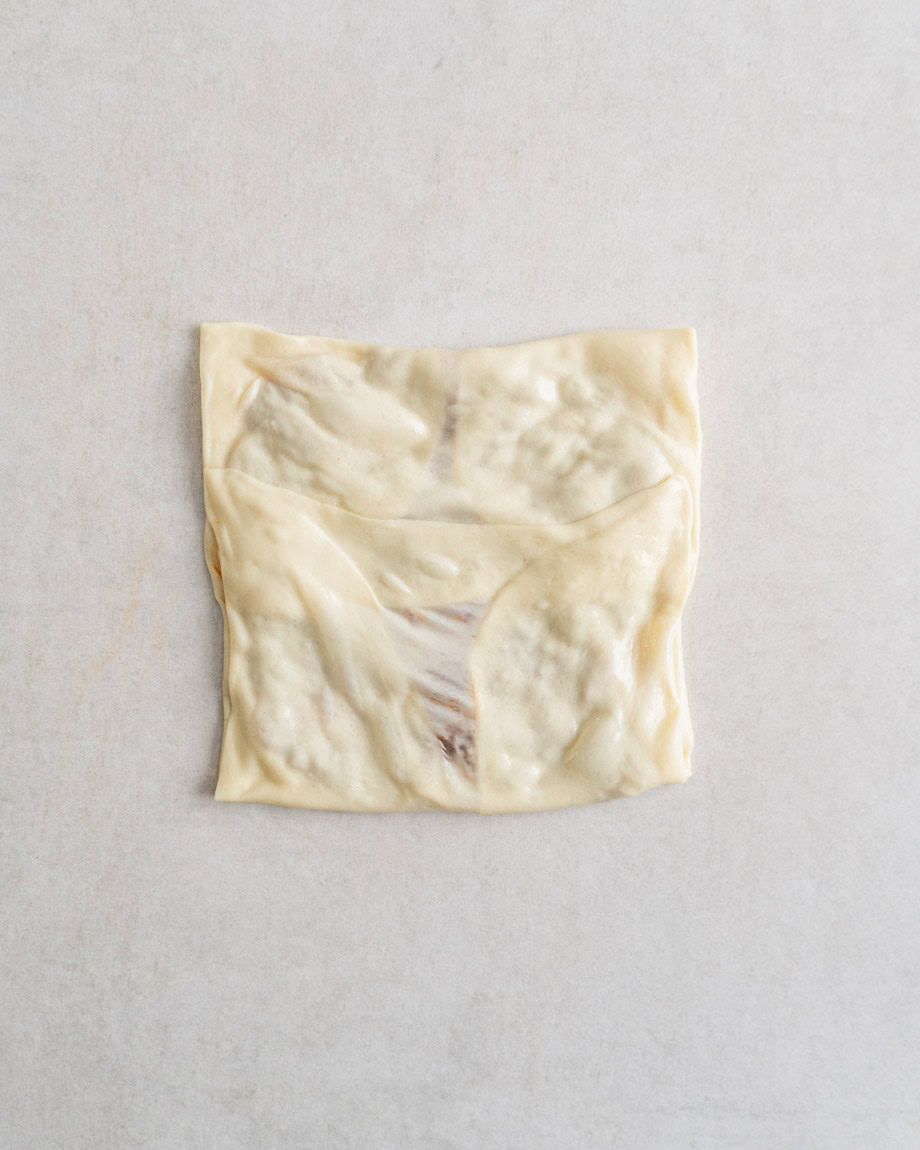
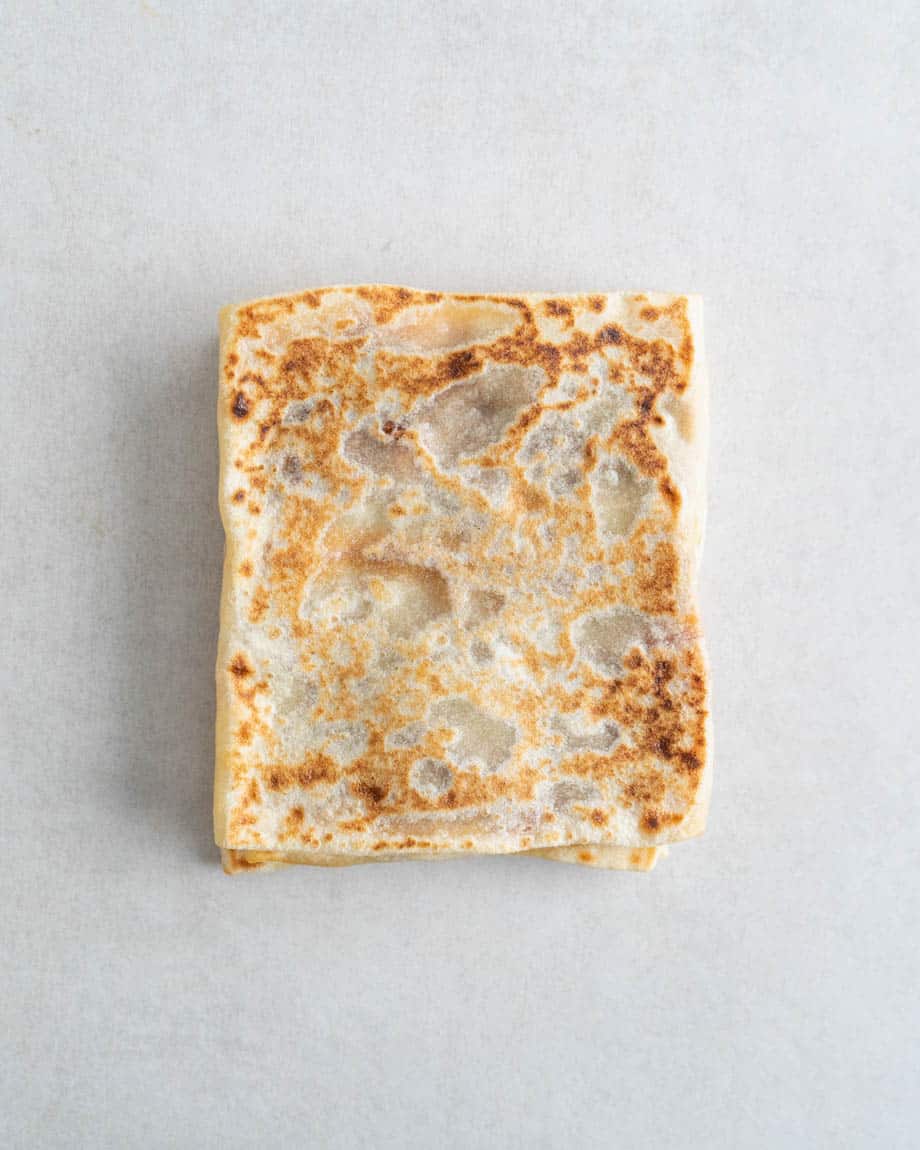
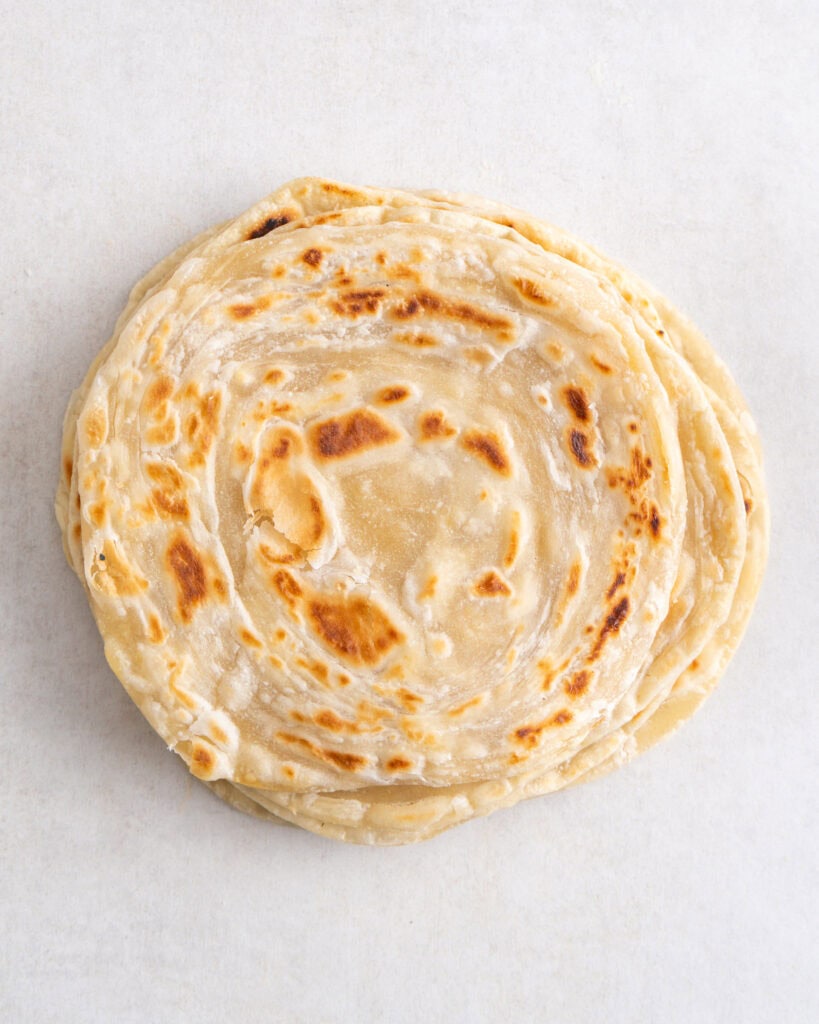
Cook the Mhajeb. Bake the Mhajeb in the hot pan for 1-2 minutes until the bottom side has dark golden spots all over. Flip it, cook for 1-2 minutes more, then transfer to a plate and cover with a clean towel to soften and keep warm. Repeat with the rest and serve warm.
Useful Tips
Here are some tips to ensure your Mhajeb turns out perfectly:
- Rest the Dough: Let the dough rest for at least 30 minutes before stretching it out. This allows the gluten to relax, making it easier to work with. If the dough still pulls back or rips while stretching, leave it to relax for a minute and try again.
- Use Enough Oil: Greasing the work surface and the dough with oil makes it much easier to stretch it out without it tearing.
- Cook on Medium Heat: Cook the Mhajeb over medium heat to ensure they cook through without burning.
- Seal the Edges: Ensure the edges of the Mhajeb are well-sealed to prevent the filling from leaking out during cooking.
- Heavy-Bottom Pan: Use a heavy pan to give the flatbreads beautiful golden spots all over. I love using my Lodge Cast Iron for this.
How to Store Mhajeb
You can freeze leftover cooked Mhajeb. To thaw them, simply place them in a 220°C preheated oven (200°C fan) from frozen and heat for 10-15 minutes. Alternatively, store them for 1-2 days in an airtight container at room temperature. Leftover dough can be refrigerated and stretched out and filled the next day.
Other Recipes You Might Like
- Kenyan Chapati: flakey flatbreads that go extremely well with a hearty curry
- Kuru Fasulye: keep it spicy with Türkiye’s National Dish
**I receive a small commission from affiliate links on this page**
Mhajeb (Algerian Stuffed Flatbreads)
Ingredients
Filling
- 4 tbsp extra virgin olive oil
- 2 large onions (400g)
- 4 large garlic cloves
- 1 tbsp tomato paste (25g)
- 1 tbsp harissa (25g)
- 1 tsp ras el hanout
- 1/2 tsp freshly ground pepper
- 1 tsp salt (7g)
- 1 x 400g can plum tomatoes
Dough
- 300 g fine semolina flour
- 100 g plain flour
- 8 g salt
- 210 ml water
- 2 tbsp olive oil (20g)
Instructions
- To make the filling, heat the oil in a pan over medium-low heat. Finely chop the onion and sauté until golden (10-12 minutes).
- Finely grate the garlic, add to the pan and cook for 1 minute until aromatic. Then stir in the tomato paste, harissa, ras el hanout and pepper. Once fragrant add the salt and plum tomatoes, crushing them with a spoon. Bring to a boil, then reduce the heat and cook for around 20 minutes, stirring often, until the liquid has reduced entirely. Set aside and allow to cool to room temperature.
- Meanwhile, mix together the ingredients for the dough, tip it out onto a clean work surface and knead it for around 10 minutes until smooth. Divide the dough into 8 equal pieces (75-80g each). Grease a baking tray with a little oil, then shape the dough pieces into balls, coat each with a little oil as well and place them on the tray. Cover the tray with a reusable plastic bag or damp kitchen towel and let the dough rest for 30 minutes.
- Preheat a heavy-bottom pan over medium heat. Coat a smooth work surface with 1 tablespoon of oil and place one dough ball on top. Using your hands, press and stretch the dough into a square thin enough that you can easily see the work surface through it, roughly 35cm x 35cm. Fold the left and right side towards each other so that they just about meet in the middle. Then add 1 large tablespoon of the filling in the middle and spread it out into a square, leaving a little bit of space towards the left and right edge. Fold the top edge towards the centre, then fold over the bottom edge to seal it, gently pressing it around the sides to prevent the filling from squeezing out.
- Bake the Mhajeb in the hot pan for 1-2 minutes until the bottom side has dark golden spots all over. Flip it, cook for 1-2 minutes more, then transfer to a plate and cover with a clean towel to soften and keep warm. Repeat with the rest and serve warm.



Hi. Think their is a mistake on this recipe. You haven’t included the ingredients for the dough!
Looking forward to seeing updated recipe so I can make these. Looks delicious.
Ditto!
All updated now, sorry about that!
Crikey! You’re right, that’s all fixed now. Sorry about that and thanks for flagging.