
The soup itself undergoes several stages of boiling, but it is then divided over clay pots, left to cool entirely for the flavours to develop and re-heated the days after. It’s an example of the clever cooking techniques of Italy’s peasant food, where something wholesome and flavourful was created from rather little. The puréed cannellini beans lend a velvety creaminess to the soup and the addition of tomatoes and woody herbs like thyme and rosemary gives the meal a hearty flavour.
serves 4
Ingredients
-
300g dried cannellini beans (also called white kidney beans)
-
1 sprig of rosemary
-
200g cavolo nero
-
200g swiss chard
-
1/4 of savoy cabbage
-
1 large onion
-
3 garlic cloves
-
2 carrots
-
2 celery sticks
-
1 medium potato
-
A few sprigs of thyme
-
2 tbsp tomato purée
-
1 tin plum tomatoes
-
1 tbsp salt
-
1/2 tsp freshly ground black pepper
-
300g stale Tuscan bread
-
extra virgin olive oil
Method
Soak the beans in plenty of water overnight.
The next day, drain the beans and add them to a saucepan along with the rosemary. Cover them with a generous amount of water, bring to a boil and simmer for 1 hour until the beans are almost tender. Remove the rosemary and drain the beans, but keep the cooking water. Set half of the beans aside, then add the other half to the jug of a blender along with 250 ml of the cooking liquid and blend into a smooth sauce.
Prepare the Cavolo Nero and chard by pulling the leaves off the stem. Finely chop the stems, tear the leaves into small pieces and set both aside in separate bowls. Cut the savoy cabbage quarter in half and then into slices and set aside as well. Heat some olive oil in a large casserole, then finely chop the onion, garlic, carrots and celery and add to the casserole as you go, followed by the chopped Cavolo Nero and chard stems. Sauté them until the onions begin to turn translucent. In the meantime, cut the potato into small chunks. Use some butcher’s string to tie the thyme together, then add to the casserole along with the diced potato. Cook for another minute and stir in the tomato purée and tinned tomatoes, breaking them up with a spoon as you go. Now add the Cavolo Nero and chard leaves as well as the sliced cabbage. Measure out the remaining cooking liquid from the beans and add enough water so that you have 2l of liquid. Add it to the casserole (but not the blended beans yet) along with the salt and black pepper. Bring to a boil, cover with a lid and simmer for 1 hour. Then add the blended beans along with the cooked beans and simmer covered for another 30 minutes. Turn off the heat.
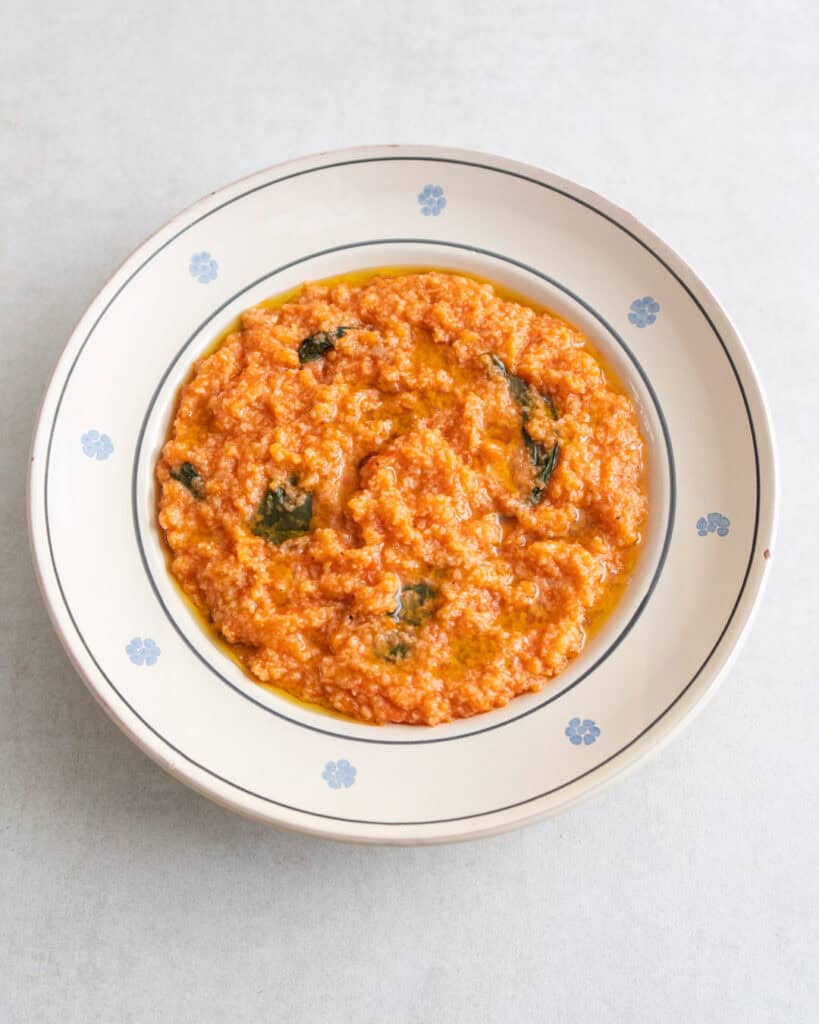
Traditionally, the Ribollita is now divided into batches over clay pots and then re-heated on the days after. You can use a casserole or deep saucepans, whatever you have around. I usually divide it over two small casseroles. Line the bottom of each casserole with a quarter of the stale bread. Then add some of the soup, followed by another quarter of the bread and the rest of the soup. Then cover each pan with a lid and let the soup cool off entirely (minimum 3 hours) or, even better, overnight in the fridge. Ribollita means reboiled, so when you’re ready to serve, bring the soup back to a boil and divide over serving bowls with a generous drizzle of extra virgin olive oil.

Ribollita
Ingredients
- 300 g dried cannellini beans (also called white kidney beans)
- 1 sprig of rosemary
- 200 g cavolo nero
- 200 g swiss chard
- 1/4 of savoy cabbage
- 1 large onion
- 3 garlic cloves
- 2 carrots
- 2 celery sticks
- 1 medium potato
- A few sprigs of thyme
- 2 tbsp tomato purée
- 1 tin plum tomatoes
- 1 tbsp salt
- 1/2 tsp freshly ground black pepper
- 300 g stale Tuscan bread
- extra virgin olive oil
Instructions
- Soak the beans in plenty of water overnight.
- The next day, drain the beans and add them to a saucepan along with the rosemary. Cover them with a generous amount of water, bring to a boil and simmer for 1 hour until the beans are almost tender. Remove the rosemary and drain the beans, but keep the cooking water. Set half of the beans aside, then add the other half to the jug of a blender along with 250 ml of the cooking liquid and blend into a smooth sauce.
- Prepare the Cavolo Nero and chard by pulling the leaves off the stem. Finely chop the stems, tear the leaves into small pieces and set both aside in separate bowls. Cut the savoy cabbage quarter in half and then into slices and set aside as well. Heat some olive oil in a large casserole, then finely chop the onion, garlic, carrots and celery and add to the casserole as you go, followed by the chopped Cavolo Nero and chard stems. Sauté them until the onions begin to turn translucent. In the meantime, cut the potato into small chunks. Use some butcher’s string to tie the thyme together, then add to the casserole along with the diced potato. Cook for another minute and stir in the tomato purée and tinned tomatoes, breaking them up with a spoon as you go. Now add the Cavolo Nero and chard leaves as well as the sliced cabbage. Measure out the remaining cooking liquid from the beans and add enough water so that you have 2l of liquid. Add it to the casserole (but not the blended beans yet) along with the salt and black pepper. Bring to a boil, cover with a lid and simmer for 1 hour. Then add the blended beans along with the cooked beans and simmer covered for another 30 minutes. Turn off the heat.
- Traditionally, the Ribollita is now divided into batches over clay pots and then re-heated on the days after. You can use a casserole or deep saucepans, whatever you have around. I usually divide it over two small casseroles. Line the bottom of each casserole with a quarter of the stale bread. Then add some of the soup, followed by another quarter of the bread and the rest of the soup. Then cover each pan with a lid and let the soup cool off entirely (minimum 3 hours) or, even better, overnight in the fridge. Ribollita means reboiled, so when you’re ready to serve, bring the soup back to a boil and divide over serving bowls with a generous drizzle of extra virgin olive oil.




0 Comments