
Chances are that you have already extracted your own potato starch in the past, when you’ve made any form of potato pancake such as hash browns, Reibekuchen or latkes. Many recipes will direct you to use a cheesecloth and squeeze the coarsely grated potatoes as dry as possible to achieve a crispy finish.
The residue water, if left to set for a little while, will have gathered an almost solid if slightly gooey layer of white starch at the bottom of the bowl. It’s a unique texture that seems to cling to the spoon at first, then runs off it in slow motion. Usually, you’d then tip the starch back into the potato mix, which helps to hold the pancakes together so that they don’t break up while frying.
When extracting your own potato starch, you simply drain off the water and let it dehydrate at room temperature for 24 hours. I’d recommend grating your potatoes finely for this, as you’ll be able to extract a much larger quantity of starches (almost double!). The leftover potatoes, already drained of all their moisture, can then easily be turned into what I call Angel Hair potato pancakes. By adding some salt and letting it sit for a while, you naturally draw out more moisture, which, together with a tablespoon or two of flour, will also help to hold their shape in the pan. The result is a super crispy pancake with thin threads of potatoes reminiscent of angel hair pasta. Great on their own or with homemade ketchup or apple sauce.
Ingredients
For the starch
-
1 kg starchy potatoes (such as Maris Piper, King Edward, Russett)
For the leftover potato pancakes
-
4 spring onions
-
1 onion
-
2 tbsp bread flour
Method
To make the potato starch, place a fine sieve in a large bowl and line it with a cheesecloth. Wash the potatoes, then finely grate them into a separate bowl (leave the peel on). Cover the grated potatoes with warm water, gently rub them with your hands to release the starches, then tip them out into the lined sieve (you might need to do this in batches). Use the cheesecloth to squeeze out as much liquid as possible. Tip the squeezed out potatoes back into the bowl and repeat the same process one more time to remove as much of the starch as possible.
Let the strained liquid sit for 15 minutes while the starches sink to the bottom of the bowl. Then carefully pour out the water, leaving only the potato starch behind. At this point, the starch will look slightly murky. To rinse it, pour some clean water into the bowl and mix it well until all of the starch has dissolved again. Then leave it to set for another 15 minutes before pouring off the water again, repeating the process one more time until the starch looks completely white.
Spread the sediment in a thin layer onto a lined baking tray and leave it to dry in a warm, sunny spot for 24 hours. Then add all of it to a blender and grind it into fine flour. Your potato starch is ready!
To make the leftover potato pancakes, cut the spring onions into 2 cm pieces and coarsely grate the onion. Then add both to the grated potatoes along with the flour and 1 tsp salt. Mix well and let it sit for 10 minutes to allow the salt to draw out more moisture, which helps the pancakes to keep their shape. Divide the mixture into eight equal balls and fry four at a time, pressing them down and shaping them into pancakes with a spatula, until golden and crispy on both sides (around 10 minutes).
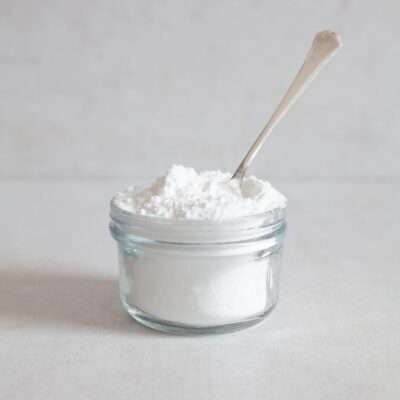
Potato Starch
Ingredients
For the starch
- 1 kg starchy potatoes (such as Maris Piper, King Edward, Russett)
For the leftover potato pancakes
- 4 spring onions
- 1 onion
- 2 tbsp bread flour
Instructions
- To make the potato starch, place a fine sieve in a large bowl and line it with a cheesecloth. Wash the potatoes, then finely grate them into a separate bowl (leave the peel on). Cover the grated potatoes with warm water, gently rub them with your hands to release the starches, then tip them out into the lined sieve (you might need to do this in batches). Use the cheesecloth to squeeze out as much liquid as possible. Tip the squeezed out potatoes back into the bowl and repeat the same process one more time to remove as much of the starch as possible.
- Let the strained liquid sit for 15 minutes while the starches sink to the bottom of the bowl. Then carefully pour out the water, leaving only the potato starch behind. At this point, the starch will look slightly mirky. To rinse it, pour some clean water into the bowl and mix it well until all of the starch has dissolved again. Then leave it to set for another 15 minutes before pouring off the water again, repeating the process one more time until the starch looks completely white.
- Spread the sediment in a thin layer onto a lined baking tray and leave it to dry in a warm, sunny spot for 24-48 hours. Then add all of it to a blender and grind into a fine flour. Your potato starch is ready!
- To make the leftover potato pancakes, cut the spring onions into 2 cm pieces and coarsely grate the onion. Then add both to the grated potatoes along with the flour and 1 tsp salt. Mix well and let it sit for 10 minutes to allow the salt to draw out more moisture, which helps the pancakes to keep their shape. Divide the mixture into eight equal balls and fry four at a time, pressing them down and shaping them into pancakes with a spatula, until golden and crispy on both sides (around 10 minutes).







You missed the most significant thing about potato starch. In raw unheated form
it is able to travel through the entire digestive system intact, and provide food for enzymes in the very rnd of digestive tract, for gut biom health. Few things can make it this far.
It cannot be cooked and still make it through but cool and raw.
Anyways, look it up, Im explaining it badly
Oh good to know, thanks for sharing!