
Sambar is a quintessential South Indian dish that is often served alongside Idli. It’s a tangy and spicy lentil-based stew that is made with a variety of vegetables, tamarind juice, and a blend of aromatic spices that give it a distinct aroma and taste. The combination of lentils and vegetables also make it a great source of protein, fibre, vitamins, and minerals. The use of tamarind adds a tangy flavour and is also rich in antioxidants. The spices used in the sambar, like turmeric, cumin, and coriander, are also known for their medicinal properties and can aid in digestion and boost immunity. It’s a great way to use up any leftover veg you might have spare. Plus, it’s traditionally vegan.
serves 4 if served with idli
Ingredients
Dal
Sambar
-
8 round shallots
-
2 green chillies
-
1 tomato
-
1 carrot
-
5 okra
-
1 potato
-
1 small aubergine
-
20g coriander
-
1/4 tsp turmeric
Sambar Powder
-
1 tbsp coriander seeds
-
1/2 tsp cumin seeds
-
1/2 tsp fenugreek seeds
-
1/2 tsp black pepper
-
1 handful of curry leaves
-
1 tbsp chana dal
-
1/2 tbsp urad dal
-
1 tsp turmeric
-
1/4 tsp asafoetida
Temper
-
3 tbsp veg oil
-
1/2 tsp mustard seeds
-
1/4 tsp fenugreek seeds
-
handful of curry leaves (10 – 15)
-
1/8 tsp asafoetida
Method
Wash the toor dal several times in water until it runs clear. Then add it to a pan along with around 600 ml water, bring it to a simmer and cook until completely soft (45 minutes). Use a potato masher to mash it into a thin porridge.
While the dal is cooking, soak the tamarind in 150 ml boiling water for 15 minutes. Then massage the tamarind between your fingers to remove it from the fibres and filter the juices through a sieve.
For the sambar powder, trim the chillis and shake out as many seeds as possible, then toast the deseeded chillis in a small frying pan until they just begin to char, then set aside. Next, toast the seeds and black pepper until aromatic. Add the curry leaves and continue toasting until they are crisp, then set aside. Finally, toast the chana and urad dal until golden and set aside as well. Let them cool off slightly, then transfer everything to a spice grinder along with the turmeric and asafoetida and grind into a fine powder.
In the meantime, peel the shallots and cut them in half. Trim and half the chillies. Roughly chop the rest of the veg into pieces as big as the shallot halves. Roughly chop the coriander. Heat some oil in a saucepan and sauté the shallots for just a minute. Add the tomatoes and chillis and sauté for another minute. Then add the rest of the veg along with 500 ml water, the turmeric and 1 1/2 tsp salt. Bring to a boil, cover and simmer for around 10 minutes until the veg are just getting soft. Add 2 tbsp of the sambar powder, followed by the tamarind juice, then add the mashed dal and bring everything back to a boil. Turn off the heat.
For the temper, add the oil to a small pan. Once hot, add the mustard seeds and fenugreek seeds. When they begin to sizzle vigorously, add the chillis followed by the curry leaves and, as soon as the leaves turn crispy, the asafoetida. Pour the temper over the sambar followed by the chopped coriander and cover with a lid to let it infuse for 2 minutes. Give it a good stir and serve together with idli or rice.
As an Amazon Associate I receive a small commission from affiliate links on this page.
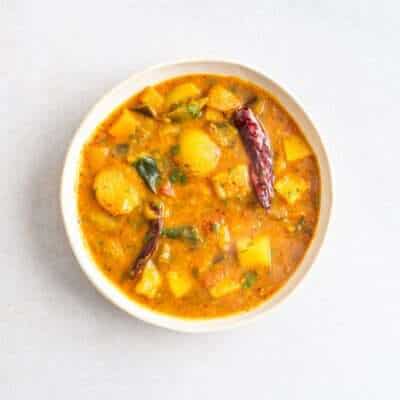
Sambar (South Indian Lentil & Veg Stew)
Ingredients
Dal
- 160 g toor dal (split pigeon peas)
Sambar
- 60 g seedless tamarind
- 8 round shallots
- 2 green chillies
- 1 tomato
- 1 carrot
- 5 okra
- 1 potato
- 1 small aubergine
- 20 g coriander
- 1/4 tsp turmeric
Sambar Powder
- 10 dried kashmiri chillis
- 1 tbsp coriander seeds
- 1/2 tsp cumin seeds
- 1/2 tsp fenugreek seeds
- 1/2 tsp black pepper
- 1 handful of curry leaves
- 1 tbsp chana dal
- 1/2 tbsp urad dal
- 1 tsp turmeric
- 1/4 tsp asafoetida
Temper
- 3 tbsp veg oil
- 1/2 tsp mustard seeds
- 1/4 tsp fenugreek seeds
- 3 dried chillis
- handful of curry leaves 10 - 15
- 1/8 tsp asafoetida
Instructions
- Wash the toor dal several times in water until it runs clear. Then add it to a pan along with around 600 ml water, bring it to a simmer and cook until completely soft (45 minutes). Use a potato masher to mash it into a thin porridge.
- While the dal is cooking, soak the tamarind in 150 ml boiling water for 15 minutes. Then massage the tamarind between your fingers to remove it from the fibres and filter the juices through a sieve.
- For the sambar powder, trim the chillis and shake out as many seeds as possible, then toast the deseeded chillis in a small frying pan until they just begin to char, then set aside. Next, toast the seeds and black pepper until aromatic. Add the curry leaves and continue toasting until they are crisp, then set aside. Finally, toast the chana and urad dal until golden and set aside as well. Let them cool off slightly, then transfer everything to a spice grinder along with the turmeric and asafoetida and grind into a fine powder.
- In the meantime, peel the shallots and cut them in half. Trim and half the chillies. Roughly chop the rest of the veg into pieces as big as the shallot halves. Roughly chop the coriander. Heat some oil in a sauce pan and sauté the shallots for just a minute. Add the tomatoes and chillis and sauté for another minute. Then add the rest of the veg along with 500 ml water, the turmeric and 1 1/2 tsp salt. Bring to a boil, cover and simmer for around 10 minutes until the veg are just getting soft. Add 2 tbsp of the sambar powder, followed by the tamarind juice, then add the mashed dal and bring everything back to a boil. Turn off the heat.
- For the temper, add the oil to a small pan. Once hot, add the mustard seeds and fenugreek seeds. When they begin to sizzle vigorously, add the chillis followed by the curry leaves and, as soon as the leaves turn crispy, the asafoetida. Pour the temper over the sambar followed by the chopped coriander and cover with a lid to let it infuse for 2 minutes. Give it a good stir and serve together with idli or rice.





Delicious. Tastes like Udupi Sambar made in Udupi homes, for eating cooked parboiled/mutta rice.
Thanks for the recipe.
Thank you so much!