
Despite being called “Almond Tofu”, Xingren Doufu is traditionally not made with almonds at all. The reason for this is a simple linguistic confusion. The mandarin words Xing Ren are commonly used to refer to both almonds and apricot kernels. And since apricot kernels have a similar flavour to almonds, Xingren Doufu is often called almond tofu.
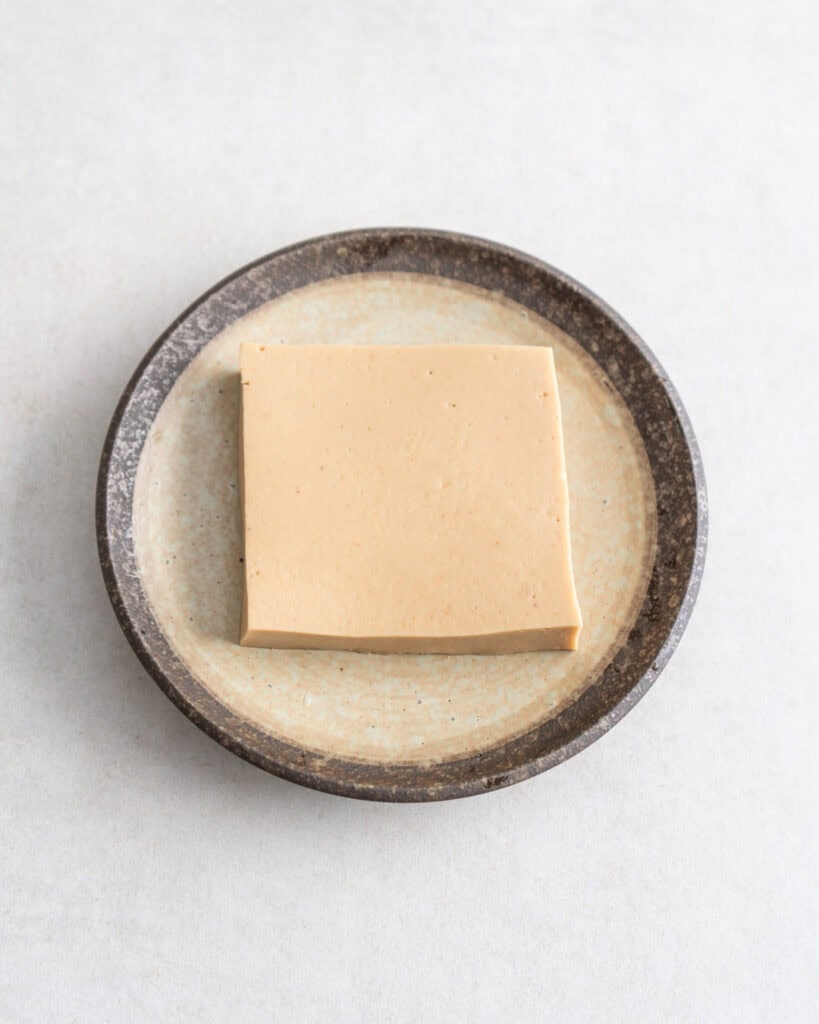
That said, it’s also not really a tofu, of course. Instead, it’s an almond jelly that is traditionally set with agar agar, a plant-based gelatin derived from seaweed. It’s a fun dessert to make, with a refreshing and mildly sweet flavour that is ideally served during summer. Plus, it happens to be traditionally vegan.
So why do I use almonds nonetheless?
Generally, raw apricot kernels with their skin on are poisonous to humans. Once the skin is removed and the kernels are blanched, they become more digestible, but should still not be consumed in large quantities. Furthermore, there are different varieties of kernels. Bitter ones contain more of the toxins, while sweet ones contain a little less and are the variety that is used to make this tofu. Due to this, many recipes nowadays use almonds instead of apricot kernels, offering a safe way for enthusiasts to try this delicious dessert.
Having said that, apricot kernels hold a special meaning in Chinese medicine and are the traditional ingredient for this dessert. If you do want to make the real deal, make sure to source some South Chinese Sweet Almonds from a trusted supplier, which, despite the name, are in fact the sought-after apricot kernels. You will then still need to use them together with (almond) milk to dilute their potency. So for this recipe, you can use 25g of Chinese Sweet Almonds and 50g of blanched almonds and follow the method to make your own milk. Doing this, there’s no need to add the additional almond extract.
Did you know?
Most almond extracts are in fact made from apricot kernels, because of their intense marzipan-like flavour.
Osmanthus Syrup
The tofu is traditionally served with Osmanthus Syrup, which can be difficult to find in shops but is easy to make with the more readily available dried osmanthus flowers. The full method is below.
serves 4
Ingredients
Osmanthus Syrup (optional)
-
250g golden granulated sugar
-
125ml water
-
1/4 tsp salt
-
8g dried osmanthus flowers
Xingren Doufu
-
75g blanched almonds
-
1/2 tsp agar agar powder (2g)
-
1/8 tsp almond extract
-
40g golden granulated sugar
-
4 tbsp osmanthus syrup + extra (see above)
Method
To make the Osmanthus Syrup, add the sugar, water and salt to a saucepan and bring to a simmer. Stir until all the sugar is dissolved, then add the omsanthus flowers and turn off the heat. Let it cool for 10 minutes, then pour the mixture into a clean jar. Once it’s cooled down entirely, you can use it immediately, but it’ll develop a richer flavour over the next days. Keep refrigerated and use within 2-3 weeks.
To make the Xingren Doufu, soak the almonds in at least 300ml water overnight.
The next day, drain and rinse them, then add to a blender along with 500ml of fresh water and blend well. Strain the liquid through a muslin cloth and squeeze out as much milk as possible. You can use the leftover pulp in your müsli.
Add the milk to a small saucepan, whisk in the agar agar powder and let it soak for 5 minutes. Turn on the heat and slowly bring it to a boil, then simmer for 5 minutes, whisking constantly to prevent it from boiling over and to allow the agar agar to dissolve entirely. Stir in the almond extract and sugar and whisk for a little longer until dissolved as well, then turn off the heat.
Pour the mixture into a mould, skim off any foam from the surface, then leave it to cool and refrigerate for 1 hour or until set.
Meanwhile, dissolve the omsanthus syrup in 160ml water, strain the liquid into a bowl and set aside.
Remove the doufu from the mould and cut it into 2 cm pieces. Divide the pieces over bowls, top them with the osmanthus water and an extra drizzle of the syrup and serve.
As an Amazon Associate I receive a small commission from affiliate links on this page.

Xingren Doufu (Chinese Almond Tofu)
Ingredients
Osmanthus Syrup (optional)
- 250 g golden granulated sugar
- 125 ml water
- 1/4 tsp salt
- 8 g dried osmanthus flowers
Xingren Doufu
- 75 g blanched almonds
- 1/2 tsp agar agar powder (2g)
- 1/8 tsp almond extract
- 40 g golden granulated sugar
- 4 tbsp osmanthus syrup + extra (see above)
Instructions
- To make the Osmanthus Syrup, add the sugar, water and salt to a saucepan and bring to a simmer. Stir until all the sugar is dissolved, then add the omsanthus flowers and turn off the heat. Let it cool for 10 minutes, then pour the mixture into a clean jar. Once it’s cooled down entirely, you can use it immediately, but it’ll develop a richer flavour over the next days. Keep refrigerated and use within 2-3 weeks.
- To make the Xingren Doufu, soak the almonds in at least 300ml water overnight.
- The next day, drain and rinse them, then add to a blender along with 500ml of fresh water and blend well. Strain the liquid through a muslin cloth and squeeze out as much milk as possible. You can use the leftover pulp in your müsli.
- Add the milk to a small saucepan, whisk in the agar agar powder and let it soak for 5 minutes. Turn on the heat and slowly bring it to a boil, then simmer for 5 minutes, whisking constantly to prevent it from boiling over and to allow the agar agar to dissolve entirely. Stir in the almond extract and sugar and whisk for a little longer until dissolved as well, then turn off the heat.
- Pour the mixture into a mould, skim off any foam from the surface, then leave it to cool and refrigerate for 1 hour or until set.
- Meanwhile, dissolve the omsanthus syrup in 160ml water, strain the liquid into a bowl and set aside.
- Remove the doufu from the mould and cut it into 2 cm pieces. Divide the pieces over bowls, top them with the osmanthus water and an extra drizzle of the syrup and serve.



Is the dried Osmanthus flower loose tea ok to use?
Exactly, that’s what I used here as well. As long as it’s 100% osmanthus flower.