
Making your own coconut milk from scratch might seem futile. After all, it’s easily available in cans in most stores. However, many brands use added thickeners and stabilisers to give the coconut milk a creamy texture that doesn’t separate, and even organic coconut milk is usually a messy concoction of water and softened pulp that is impossible to mix together. Plus, if you’ve ever tasted fresh coconut milk, you know that the shop-bought stuff is sadly nowhere near.
Don’t get me wrong. When recipes ask for coconut milk I also usually reach for a can. But making your own from scratch, at least once, will give you a different appreciation for its flavour and value. Good coconut milk is hard to come by and when there’s a special occasion or when you simply want to experience the purity of natural flavour, then making it yourself is your best bet.
If you’re after some inspiration for what to do with your coconut milk, one of the best ways to savour a freshly made batch is to turn it into Tembleque, a traditional Puerto Rican dessert (pictured below).
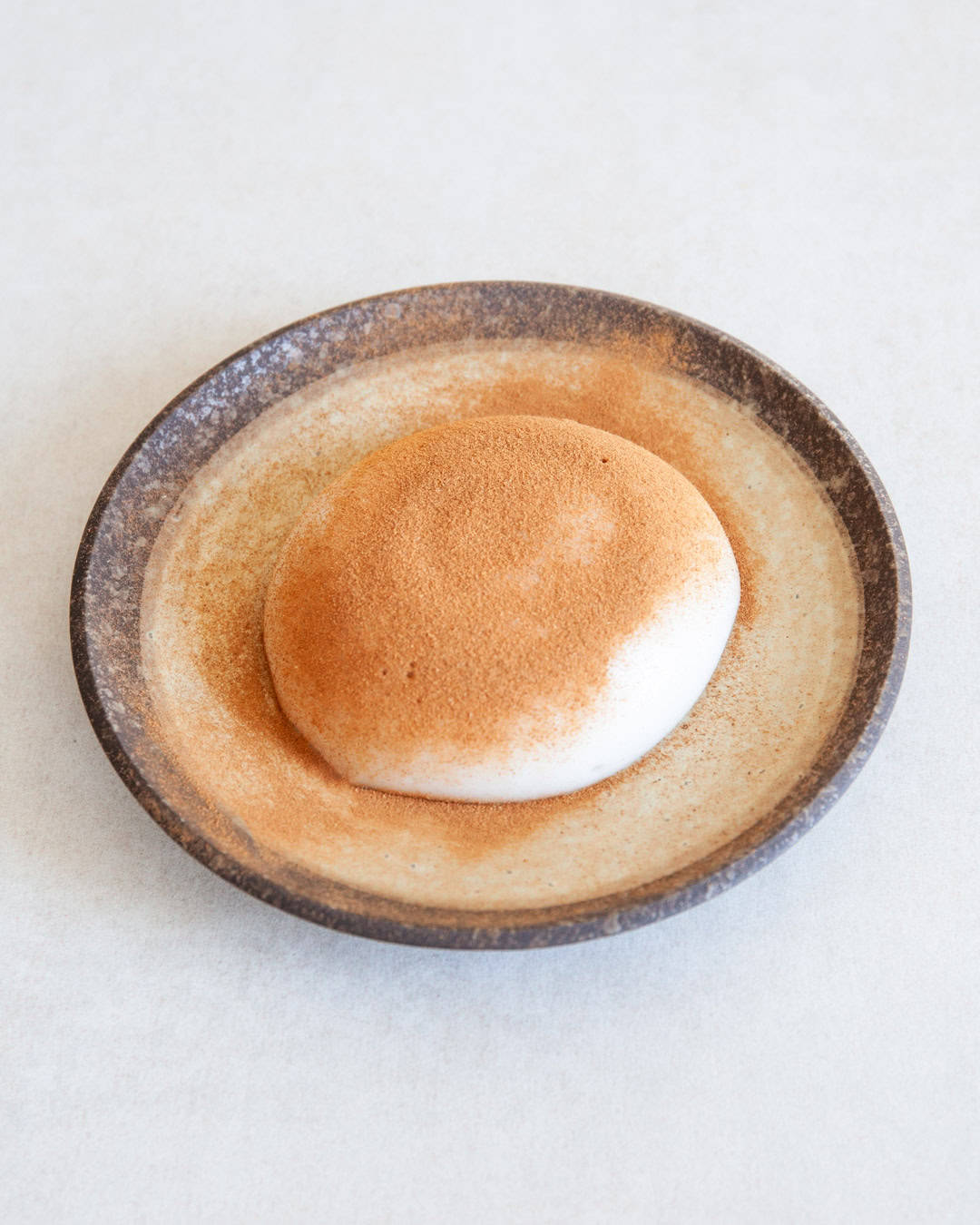
Puerto Rican Tembleque
What kind of coconut should you use?
To make coconut milk, you want to use a mature coconut. These are the brown ones with the hairy husk. Younger green coconuts are mostly used for their water and tender flesh.
How to tell if a coconut is ripe or spoiled?
To determine if the coconut you’re about to buy is ripe take the two steps below:
- shake it – good coconuts will have a sloshing sound, indicating there is still plenty of water inside. If you don’t hear any or only a little liquid, it could mean that it has dried out, which might indicate that the coconut is too old to still be any good.
- check the eyes – inspect the three “eyes” at the top of the coconut. They should be dry and not mouldy.
Coconut Cream
Turning your coconut milk into coconut cream is easy. Simply pour the milk into a (glass) bowl and let it sit for 15 minutes. The cream and water will separate and you can skim off the cream from the surface. Using a glass bowl makes this easier, because you can see the separation, similar to the glass bottle below.
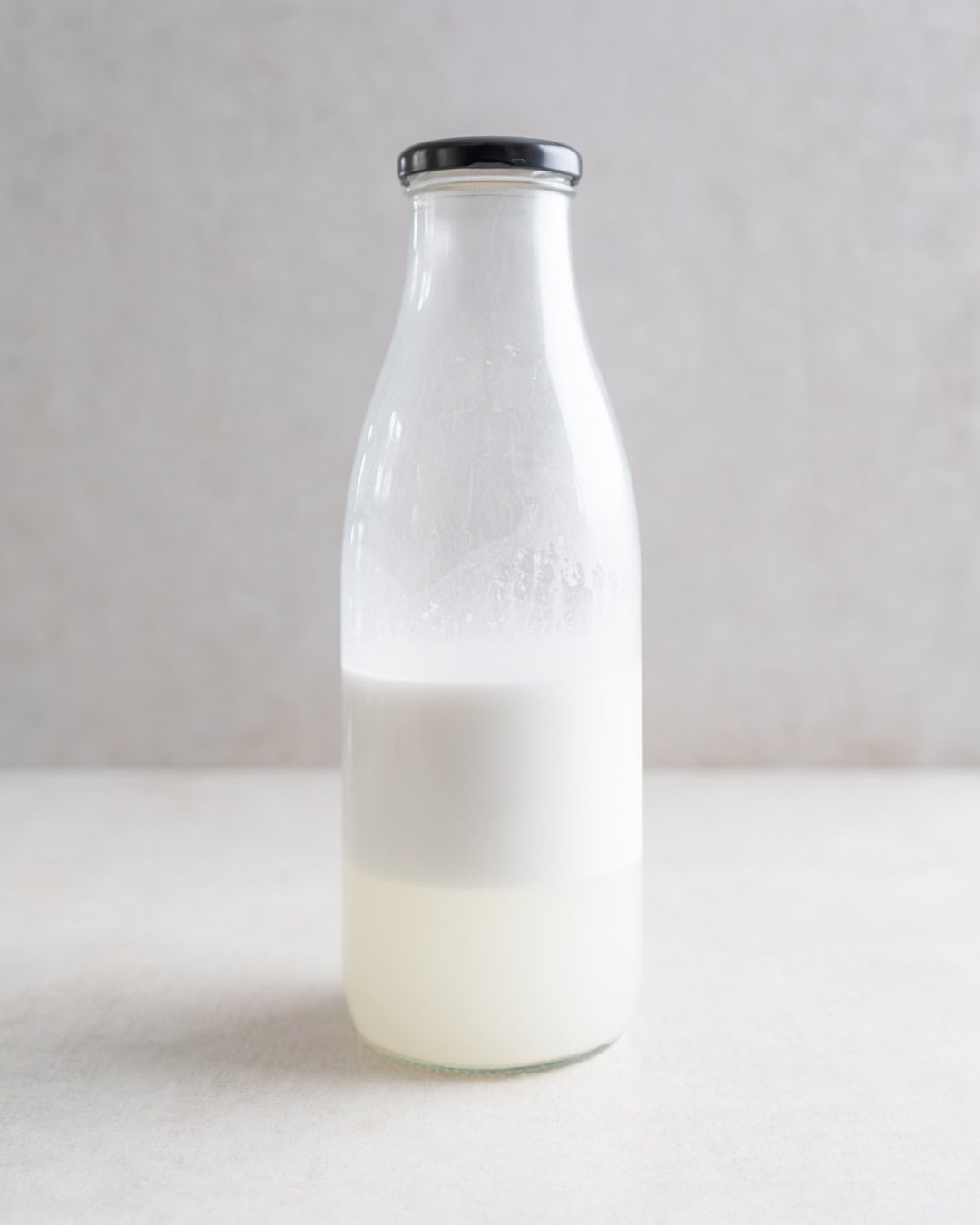
Coconut Cream & Water Separation
Makes 400-500 ml of coconut milk
Ingredients
1 large fresh coconut
Method
Hold the coconut over a bowl and use the back of a sturdy knife (or a rolling pin, but it might leave dents) to knock firmly on the centre of the shell, going around the equator until it cracks open and catching the water in the bowl (you can strain and drink it).
With a blunt butter knife, pierce between the flesh and shell and wiggle the knife around the flesh to loosen it (it might take a few turns before it pops loose), then peel off the brown skin.
Weigh the flesh, then roughly chop it and blend along with 1.5x the weight in water until completely broken down. Strain through a sieve lined with a cheesecloth and squeeze out as much milk as you can. Store in a bottle or an airtight container in the fridge until needed. The coconut cream and water will naturally separate after a few minutes, so just give it a shake before using.
Leftover Tip #1: Spread out the leftover coconut pulp on a baking tray and dehydrate it in the oven (at 80°C) for around 1-2 hours, or in the sun, until completely dry. Then grind it for your own coconut flour.
Leftover Tip #2: You can use the leftover shell without the hole as a makeshift bowl. Place it onto a gas hob and turn on the flame to burn off any fibres. Then use some sandpaper to smoothen it all around. Give it a few coatings of flaxseed oil before letting it dry and using the shell as a bowl.
Storage: You can store the milk for 3-4 days in the fridge.
As an Amazon Associate I receive a small commission from affiliate links on this page.
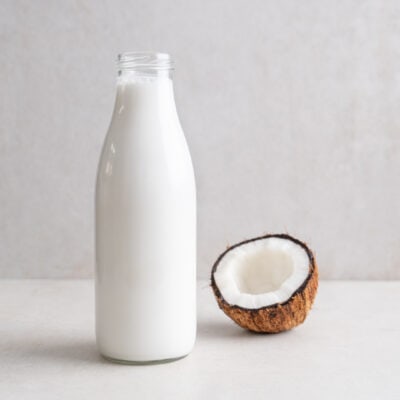
Coconut Milk
Ingredients
- 1 large fresh coconut
Instructions
- Hold the coconut over a bowl and use the back of a sturdy knife (or a rolling pin, but it might leave dents) to knock firmly on the centre of the shell, going around the equator until it cracks open and catching the water in the bowl (you can strain and drink it).
- With a blunt butter knife, pierce between the flesh and shell and wiggle the knife around the flesh to loosen it (it might take a few turns before it pops loose), then peel off the brown skin.
- Weigh the flesh, then roughly chop it and blend along with 1.5x the weight in water until completely broken down. Strain through a sieve lined with a cheesecloth and squeeze out as much milk as you can. Store in a bottle or an airtight container in the fridge until needed. The coconut cream and water will naturally separate after a few minutes, so just give it a shake before using.
- Leftover Tip #1: Spread out the leftover coconut pulp on a baking tray and dehydrate it in the oven (at 80°C) for around 1-2 hours, or in the sun, until completely dry. Then grind it for your own coconut flour.
- Leftover Tip #2: You can use the leftover shell without the hole as a makeshift bowl. Place it onto a gas hob and turn on the flame to burn off any fibres. Then use some sandpaper to smoothen it all around. Give it a few coatings of flaxseed oil before letting it dry and using the shell as a bowl.
Notes



Hello my Name is Baby Mussamba Am a young scientist but also am a human rights activist of the intersex people but also Iam a baker and I love to cook variety of the cuisine can we connect please I love what you do