Baking Hermann
Recipes

Kenyan Chapati

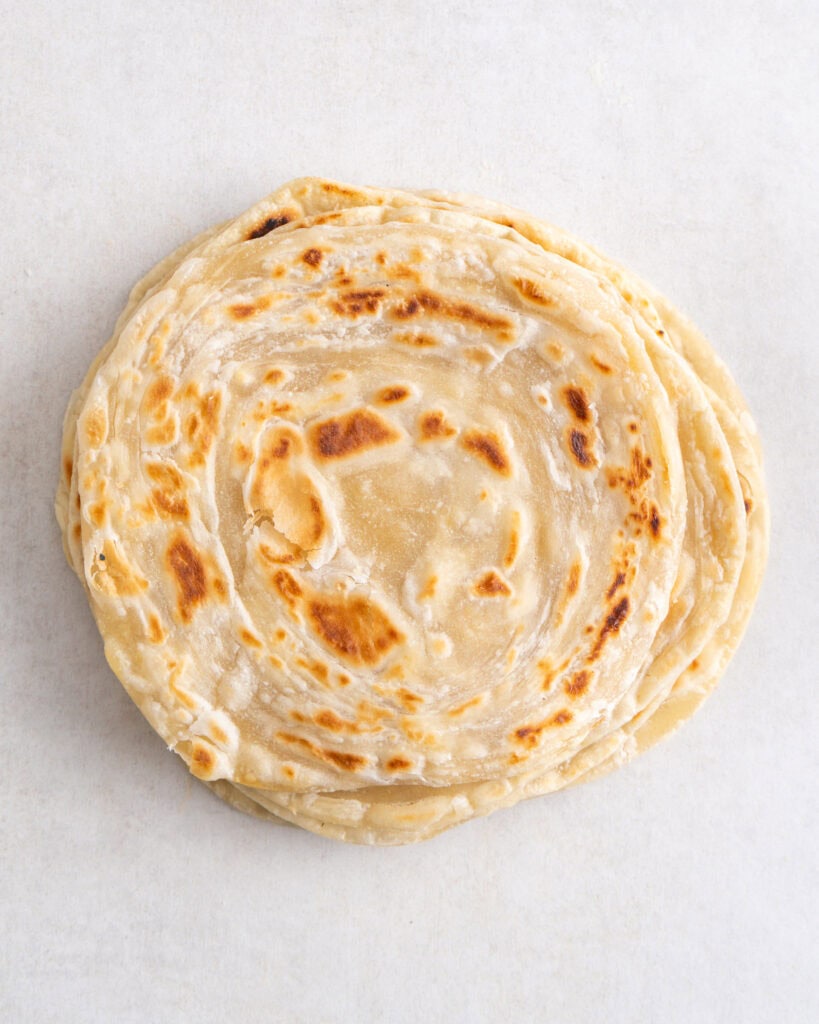
Kenyan Chapati are a beloved staple in Kenyan cuisine, renowned for their soft, flaky texture and rich flavour. This flatbread, with its origins in Indian cuisine, has been warmly embraced and adapted by Kenyan cooks, making it a common accompaniment to various dishes such as stews, curries, and vegetables. The preparation of chapati involves kneading dough made from wheat flour, water and oil, which is then rolled into thin layers and cooked on a hot griddle until golden brown.

These flakey flatbreads are the perfect companion to Ndengu, a rich Kenyan mung bean curry. Although called chapati, it is similar to Indian Laccha Paratha, one of the many cross-cultural influences from the Indian subcontinent that workers brought to Kenya in the 19th century. Pair it with Ndengu for a wholesome meal that is traditionally vegan.

Storage

These are best eaten the same day. You can also freeze the cooked chapati in reusable plastic bags. To thaw them, simply reheat from frozen in a hot pan until softened.

makes 6 chapati

Ingredients

  • 300g plain flour
  • 1 tsp golden granulated sugar (7g)
  • 1 tsp salt (6g)
  • 30g vegetable oil plus more for brushing
  • 150ml warm water

Method

Add the flour to a large bowl and make a well in the middle. Add the sugar, salt, oil and water and mix everything into a rough dough. Tip it out onto a clean work surface and place the bowl upside down on top to cover it. Leave to rest for 5 minutes, which will hydrate the dough and make it easier to handle.

Knead the dough for just 2-3 minutes, adding a little more flour if necessary. It should be soft but still sticky. Grease a clean bowl with a little more oil, place the dough inside and cover with a reusable plastic bag or damp kitchen towel. Leave to rest for at least 30 minutes (and up to 2 hours).

Tip the dough out onto the surface and divide it into 6 pieces (around 80-85g each). Shape each into a round ball by tucking the corners underneath and gently stretching it over the surface with a curbed hand. Cover the pieces again with the plastic or towel and let them rest for another 5 minutes (otherwise they will spring back when trying to roll them out).

Lightly flour the surface and one of the dough balls and roll it out into a thin sheet. Brush 1 teaspoon of oil all over it and dust it with a little more flour, then start from the longest side and roll the sheet into a rope. Gently stretch the rope out a little more by holding the ends in your hands and slapping it onto the surface. Place it back onto the surface and, starting from one end, roll it into a snail shape. Cover again while you continue with the rest.

Pre-heat a heavy-bottomed frying pan over medium-high heat. Then roll the prepared dough out until it is around 16-18cm wide and 3-4mm thick. Reduce the heat to medium and bake the chapati on one side until bubbles appear on the surface and it has light golden spots underneath when you lift it. Flip it around and brush 1/2 teaspoon of oil over the surface. Then flip again and brush the other side with oil as well. Continue baking for 1-2 minutes, flipping every now and then, until it has dark golden spots all over. Transfer to a plate and cover with a clean tea towel to keep warm and soft, then continue with the rest.

Kenyan Chapati

Kenyan Chapati are a beloved staple in Kenyan cuisine, renowned for their soft, flaky texture and rich flavour. This flatbread, with its origins in Indian cuisine, has been warmly embraced and adapted by Kenyan cooks, making it a common accompaniment to various dishes such as stews, curries, and vegetables. The preparation of chapati involves kneading dough made from wheat flour, water and oil, which is then rolled into thin layers and cooked on a hot griddle until golden brown.
5 from 1 vote
Active Time 1 hour
Total Time 1 hour 40 minutes
Course sides, Staples
Cuisine Kenyan
Servings 6 Chapati

Ingredients
  

  • 300 g plain flour
  • 1 tsp golden granulated sugar (7g)
  • 1 tsp salt (6g)
  • 30 g vegetable oil plus more for brushing
  • 150 ml warm water

Instructions
 

  • Add the flour to a large bowl and make a well in the middle. Add the sugar, salt, oil and water and mix everything into a rough dough. Tip it out onto a clean work surface and place the bowl upside down on top to cover it. Leave to rest for 5 minutes, which will hydrate the dough and make it easier to handle.
  • Knead the dough for just 2-3 minutes, adding a little more flour if necessary. It should be soft but still sticky. Grease a clean bowl with a little more oil, place the dough inside and cover with a reusable plastic bag or damp kitchen towel. Leave to rest for at least 30 minutes (and up to 2 hours).
  • Tip the dough out onto the surface and divide it into 6 pieces (around 80-85g each). Shape each into a round ball by tucking the corners underneath and gently stretching it over the surface with a curbed hand. Cover the pieces again with the plastic or towel and let them rest for another 5 minutes (otherwise they will spring back when trying to roll them out).
  • Lightly flour the surface and one of the dough balls and roll it out into a thin sheet. Brush 1 teaspoon of oil all over it and dust it with a little more flour, then start from the longest side and roll the sheet into a rope. Gently stretch the rope out a little more by holding the ends in your hands and slapping it onto the surface. Place it back onto the surface and, starting from one end, roll it into a snail shape. Cover again while you continue with the rest.
  • Pre-heat a heavy-bottomed frying pan over medium-high heat. Then roll the prepared dough out until it is around 16-18cm wide and 3-4mm thick. Reduce the heat to medium and bake the chapati on one side until bubbles appear on the surface and it has light golden spots underneath when you lift it. Flip it around and brush 1/2 teaspoon of oil over the surface. Then flip again and brush the other side with oil as well. Continue baking for 1-2 minutes, flipping every now and then, until it has dark golden spots all over. Transfer to a plate and cover with a clean tea towel to keep warm and soft, then continue with the rest.
Notes

These are best eaten the same day. You can also freeze the cooked chapati in reusable plastic bags. To thaw them, simply reheat from frozen in a hot pan until softened.
Print Recipe

2 Comments

  1. Proff Musa

    5 stars
    I love seeing these recipes from East Africa (Kenyan here), and they are all perfect. I’d swear you’re a native. For these chapati, if you want more flavor, use oil for making the dough, but switch to ghee for cooking on the pan. Adding coconut cream to the dough adds a touch of the coastal region.

    Reply
    • Julius Fiedler

      Haha thank you so much for the compliments and tips!

      Reply

Submit a Comment

Your email address will not be published. Required fields are marked *

Recipe Rating


Recent Recipes

Kara Chutney (Spicy Indian Garlic, Onion and Tomato Chutney)

Kara Chutney (Spicy Indian Garlic, Onion and Tomato Chutney)

Chutneys are a powerful way to enrich a great many Indian dishes with varying flavors and textures. To add a little bit of heat, Kara Chutney is a fiery asset to have in your chutney repertoire. My Recipe Videos [mv_playlist id="5541" jsonLd="false" key="5541"...

Dosa (South Indian Fermented Rice & Lentil Pancakes)

Dosa (South Indian Fermented Rice & Lentil Pancakes)

Dosa needs no introduction. It has long gained popularity around the world as a thin, cylinder-shaped, crispy pancake that is served so large, it reaches far over the edges of the plate. In South India's Bengaluru, however, another version of dosa reigns supreme....

Ajo Blanco (Spanish Bread & Almond Soup)

Ajo Blanco (Spanish Bread & Almond Soup)

The first time I made Ajo Blanco was an absolute mess. I can't recall what recipe I followed, but the ratios were completely off and it included unnecessary steps of passing the blended soup through a sieve. I faintly remember trying to squeeze a pulp-like mix of...

Mhajeb (Algerian Stuffed Flatbreads)

Mhajeb (Algerian Stuffed Flatbreads)

Upgrade your flatbread game with these Algerian Mhajeb. Flatbreads are delightful, especially when stuffed, but Mhajeb take it to the next level. The dough is stretched out so thin that you can literally see your hand through it. The result is incredible soft layered...

Pappa al Pomodoro (Tuscan Tomato and Bread Soup)

Pappa al Pomodoro (Tuscan Tomato and Bread Soup)

Cucina Povera, Italy's kitchen of the poor, has long been known for its use of simple, humble ingredients and frugal cooking methods. With a lack of expensive ingredients, resourcefulness became a priceless way to make food more flavoursome and nourishing. And often...

Kuzhi Paniyaram (Indian Crispy Lentil & Rice Balls)

Kuzhi Paniyaram (Indian Crispy Lentil & Rice Balls)

Ever since I made Idli for the first time, they have become a firm favourite. There is something magical about being able to mix together a simple batter made from rice and lentils and let it ferment all by itself without the need for any form of added yeast. A...

Peanut Spread (Gluten-free)

Peanut Spread (Gluten-free)

Previously, I've made tofu out of chickpeas, green peas, red lentils, black beans and, the traditional one, soybeans. Which is another way of saying that you can make tofu out of pretty much any legume. If you'd like to know more about this, check out my Any Legume...

Çiğ Köfte (Turkish Bulgur Balls)

Çiğ Köfte (Turkish Bulgur Balls)

Who would have thought that the Turkish Health Ministry would play a part in creating one of the country's most iconic plant-based street food dishes? Çiğ Köfte has long been a staple food in the southeastern parts of Türkiye. However, it is traditionally made with a...

Curry Leaves Ice Cubes

Curry Leaves Ice Cubes

Curry leaves grow in abundance in India and are easily available in most shops for a few rupees. But if you live elsewhere you might find it difficult to source them. The trouble is that curry leaves are an incredibly aromatic and delicious addition to Indian food....

Ndengu (Kenyan Mung Bean Curry)

Ndengu (Kenyan Mung Bean Curry)

In the 19th century, thousands of Indian workers were employed in Kenya to build a vast local railway network. They brought with them their own food culture and used ingredients and cooking methods to create dishes that felt close to home. Today, many Kenyan dishes...

Hazelnut Tofu (Hazelnut Dofu)

Hazelnut Tofu (Hazelnut Dofu)

Imagine the flavour of roasted nuts captured into a creamy pudding. That's what Hazelnut Dofu is all about. It's inspired by Goma Dofu, a traditional Japanese appetiser that is made with sesame seeds and kuzu starch. But you can follow the same method and turn any nut...

Potaje de Garbanzos (Spanish Chickpea, Potato & Spinach Stew)

Potaje de Garbanzos (Spanish Chickpea, Potato & Spinach Stew)

During my search for traditional plant-based dishes from around the world two themes reappear time and again. Religion and poverty. Both of these have long shaped food cultures towards naturally vegan options. Potaje de Garbanzos is a great example. The comforting...