
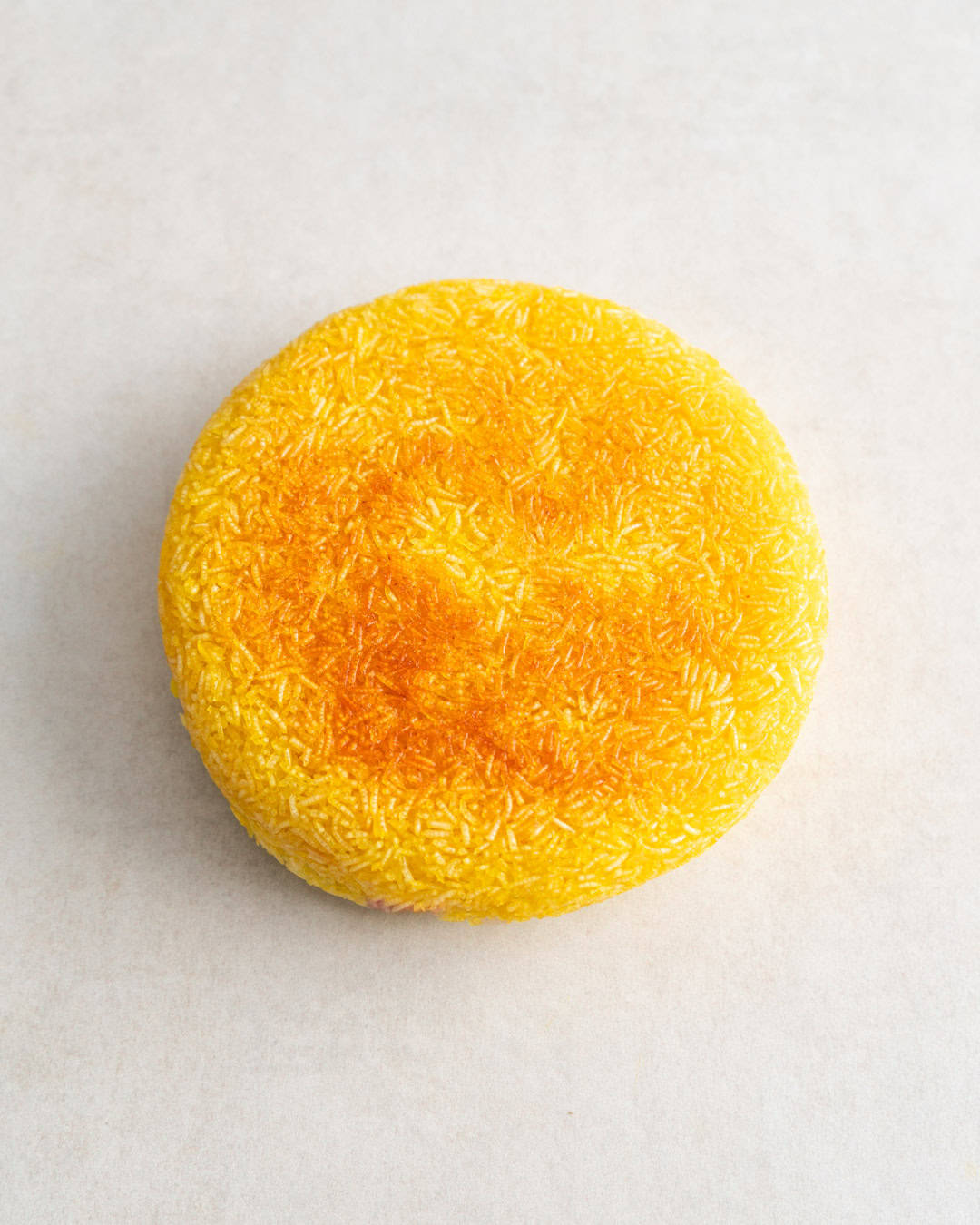
Tahdig is a culinary highlight of Persian cooking. Perfectly steamed rice made better by giving it an incredibly crispy bottom layer. Traditionally, it’s made with butter and/or yoghurt, but I’ve always been craving a naturally plant-based version of this crispy rice. When I recently discovered how most locals bloom saffron, it was the perfect opportunity to use up the infused saffron water and finally sharpen my tahdig skills with nothing else but olive oil.
Tahdig translates to “bottom of the pot” in Persian, which refers to the golden, crispy layer of rice that forms at the bottom of the cooking vessel. It makes a delicious contrast to the perfectly steamed rice that sits right on top.
It’s incredibly simple, but requires you to get accustomed with your hob. Every heat source differs slightly and whilst using the smallest hob/burner works for me, it might not give you that golden layer when you try it yourself. I’d recommend following this recipe for the first time (less risk to burn the rice). If you then want the crispy layer more golden either cook it for a little longer, or try a slightly larger hob next time.
Ingredients
- 1 pinch of saffron (0.25g)
- 320g basmati rice
- 2 tbsp salt
- 3 tbsp olive oil
Method
Follow this method to bloom you saffron at least 1 hour ahead (or for how much time you have available).
Fill a large pan with 2l of water, season with the salt and bring to a boil. Meanwhile, wash the rice in plenty of water until it runs almost clear. Once the water is boiling, add the rice and cook it for 5 minutes at a steady boil, which ensures that the grains won’t stick together. Drain the rice into a sieve and cool under running water.
Tip the drained rice into a bowl and mix in 2 tbsp of the infused saffron water until most of the rice has turned bright yellow (you can freeze any leftover saffron water for next time).
Pour the oil into a saucepan for which you have a lid. Twirl the pan so that the oil covers the bottom, then add half of the rice. Use a spoon to gently flatten the rice into an even layer. Now add the remaining rice, shaping it into a pyramid rather than flattening it. Use the long end of a wooden spoon to poke 5 holes into the rice to let the steam escape, taking care not to poke through the bottom layer. Wrap an old kitchen towel around the lid and use an elastic to tie the corners together above the lid handle. Take care that none of the corners hang off the side of the lid, since they might get too close to the heat source. Cover the pan with the lid and place it on the highest heat of the smallest hob for 5 minutes until the rice begins to sizzle in the pan. Turn the heat to low and cook for 45 minutes, then turn it off and leave to steam for another 5 minutes.
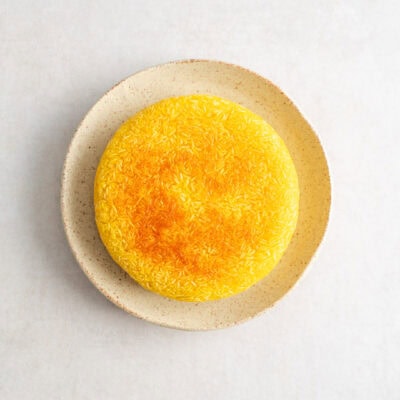
Remove the lid, flatten the pyramid shape into an even layer and flip the rice onto a serving plate. It should have a crispy golden layer on top. Serve immediately.
As an Amazon Associate I receive a small commission from affiliate links on this page.
Tahdig-Inspired Crispy Saffron Rice
Ingredients
- 1 pinch of saffron (0.25g)
- 320 g basmati rice
- 2 tbsp salt
- 3 tbsp olive oil
Instructions
- Follow this method to bloom you saffron at least 1 hour ahead (or for how much time you have available).
- Fill a large pan with 2l of water, season with the salt and bring to a boil. Meanwhile, wash the rice in plenty of water until it runs almost clear. Once the water is boiling, add the rice and cook it for 5 minutes at a steady boil, which ensures that the grains won't stick together. Drain the rice into a sieve and cool under running water.
- Tip the drained rice into a bowl and mix in 2 tbsp of the infused saffron water until most of the rice has turned bright yellow (you can freeze any leftover saffron water for next time).
- Pour the oil into a saucepan for which you have a lid. Twirl the pan so that the oil covers the bottom, then add half of the rice. Use a spoon to gently flatten the rice into an even layer. Now add the remaining rice, shaping it into a pyramid rather than flattening it. Use the long end of a wooden spoon to poke 5 holes into the rice to let the steam escape, taking care not to poke through the bottom layer. Wrap an old kitchen towel around the lid and use an elastic to tie the corners together above the lid handle. Take care that none of the corners hang off the side of the lid, since they might get too close to the heat source. Cover the pan with the lid and place it on the highest heat of the smallest hob for 5 minutes until the rice begins to sizzle in the pan. Turn the heat to low and cook for 45 minutes, then turn it off and leave to steam for another 5 minutes.
- Remove the lid, flatten the pyramid shape into an even layer and flip the rice onto a serving plate. It should have a crispy golden layer on top. Serve immediately.



Step 4 has so many steps, I am not able to understand them clearly.. Can you elaborate or show a short video/gif?
Cheers
I’ll try to make a video about this soon. Let me know if there’s anything specific you’d like me to explain more.
My rice did not cook! I will try again with a bigger hob.
It didn’t cook as in it wasn’t tender? Make sure to parboil it in the boiling water and cook it for 5 mins once it has come back to a boil after adding the rice. This step is crucial to allow it to cook properly later on. If it hasn’t formed a golden crust, then yes, change the hob and try again. It’s difficult to standardise this part as every hob is different.